







By William S. Jackson
The following appeared as the “From Where I Sit” column in the May 12, 2016 issue of the newspaper, The Sun, serving the Lower Dauphin County in Pennsylvania, which includes the towns of Hershey and Hummelstown. The column was penned by Mr. William S. Jackson, who attended Mowglis during the summers of 1946 and 1947. Mr. Jackson owned The Sun with his wife until his retirement in 2007 and continues to pen the weekly column. The column is reprinted with permission from The Sun.
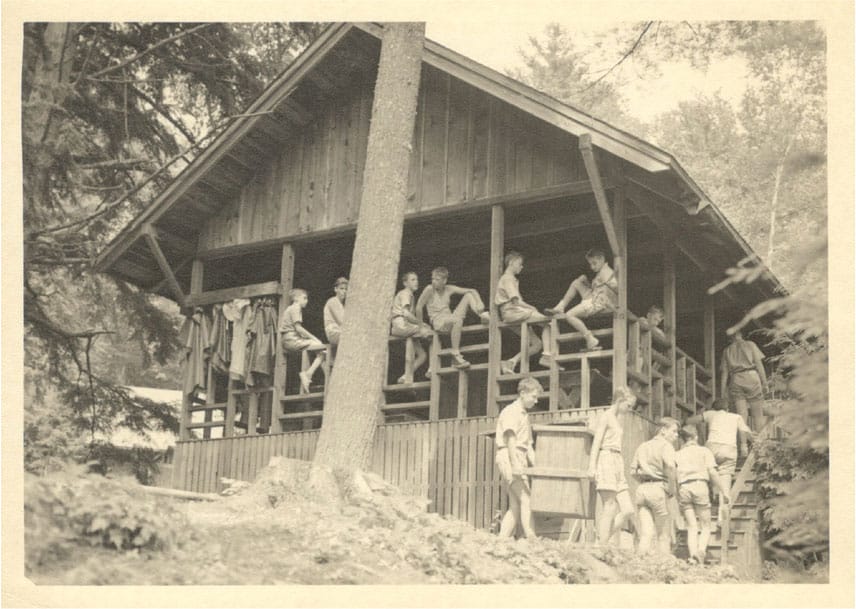
Mr. Jackson also generously provided us with old photographs from his albums, which are reproduced alongside this article:
“Last month I was surprised and pleased with the announcement of a new film version of The Jungle Book from Disney. The new film, with some name members such as Bill Murray as Baloo the bear, is an update with much better animation than the 1967 version of the Rudyard Kipling children’s classic by the same name.
“For those not familiar with The Jungle Book, it tells the story of a young boy named Mowgli (pronounced ‘Mauglee,’) who was abandoned in the jungle and is raised by a family of wolves headed by Akela, befriended by the giant bear Baloo, and pursued by other less friendly animals such as Shere Khan, the evil tiger who seeks revenge against the wolf family.
“For me, my memories of The Jungle Book and its cast of characters goes back much further than that.
“It was 1946. The war was just over and I had lost my father the previous Feb. 23, killed in combat in Germany.
“I was a somewhat depressed 12-year-old boy facing a summer in which I wasn’t looking forward to playing ‘war’ with my friends as we usually did, for obvious reasons.
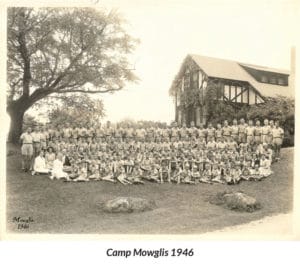
“My mom recognized this and after consulting with some friends who had found a wonderful summer camp for boys, I was signed up to spend eight weeks at something called Camp Mowglis located in the wooded area outside Hebron, New Hampshire. We were all clothed identically, having received a complete uniform, rainwear, etc., package from an outfitter in Boston, Mass.
“Parents dropped us off at the camp and were gone, and we were immediately introduced to our counselors, either young men in college, teachers, or, in those days, several returning World War II veterans.
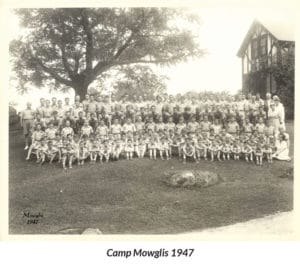
“We were divided into barracks based on our age—the camp was for boys ages 7–15—and each age group gained a name from Kipling’s The Jungle Book. I was initially an Akela, or a wolf, and when I returned in 1947 I was a Baloo, or a bear.
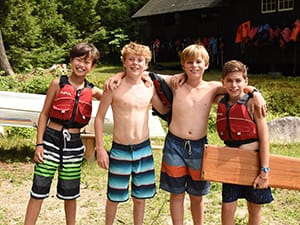
“The camp was located on 128 wooded acres on the shore of Newfound Lake, which lies just south of New Hampshire’s White Mountains. Throughout the camp were many playing fields, plus rifle range, archery range, clay tennis courts, and a fully-equipped craft shop, where I made a Railway Express warehouse in the scale of my Lionel 027 model trains at home.
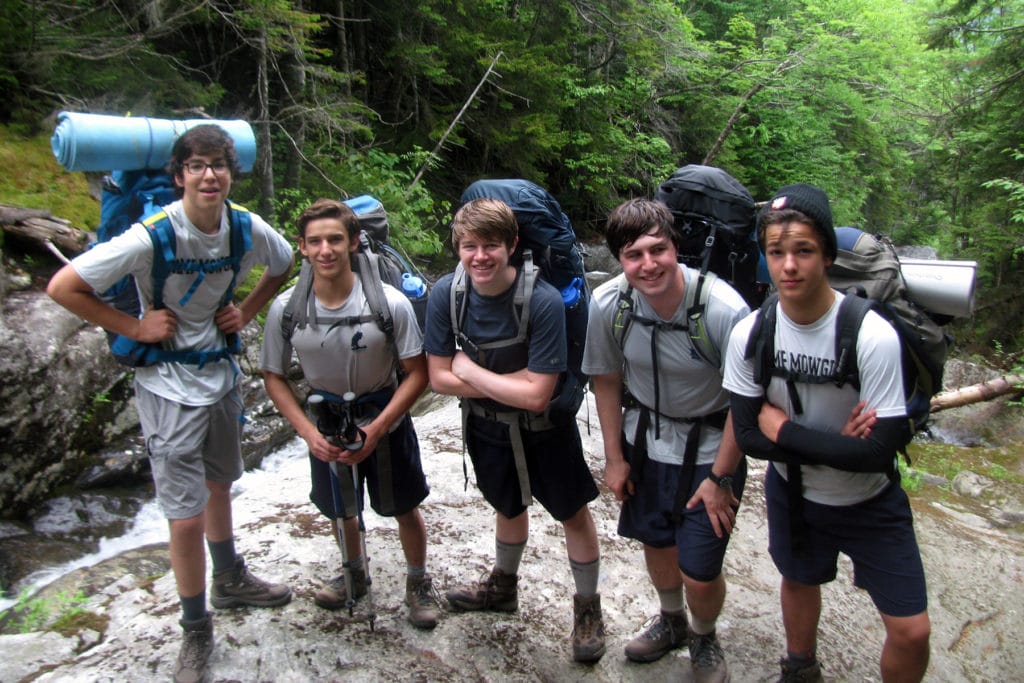
“We learned all types of woodcrafts, starting from the basics of how to properly use and care for a knife, then a hatchet, and finally a woodsman’s ax. Of the latter, once you were qualified, you could purchase your own special axe that you could carry with you on the many trail hikes through the White Mountains.
“The camp leader I have never forgotten. His name was Col. Alcott Farrar Elwell, and I’m pretty sure he had been around since the camp started, which I was surprised to find out, thanks to Editor Dave checking the Internet for me, was in 1903.
“The Jungle Book connection had been there since the beginning as, with the permission of author Kipling, the camp’s founder borrowed the names from his ‘Jungle Books.’ During his life, Kipling kept in contact with the camp and maintained an active interest in the undertaking so influenced by his stories.
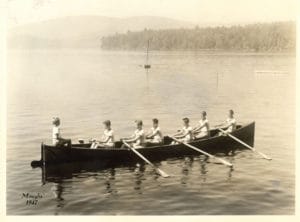
“The Kipling influence was there in daily activities such as our swimming tests based on distance. There was a pole in the lake about 220 yards from shore. If you swam to it, it was called a ‘Half Waingunga’ named after a river in The Jungle Book, and if you swam out and back, it was a ‘Full Waingunga.’
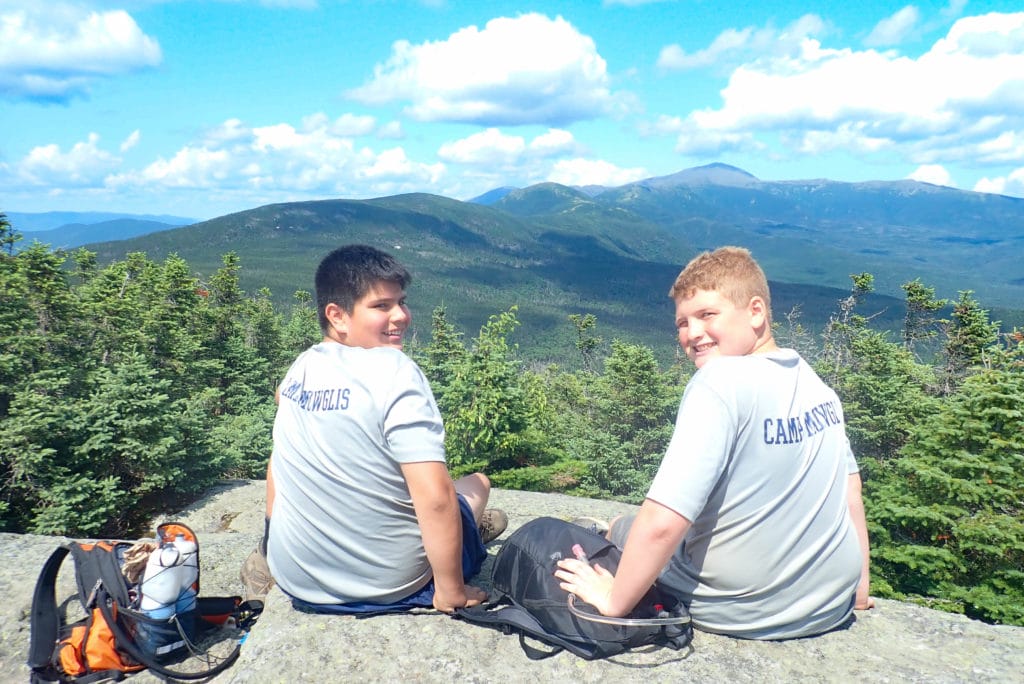
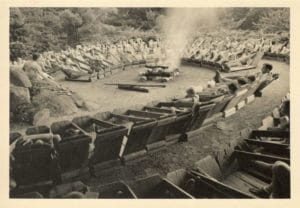
“The hiking and woodland skill training were rigorous and the goal was to excel to a point where you would be chosen for the Mount Washington trip. This was a three-day hike in which you climbed Mount Washington to the peak, then came down the interface of the mountain, spending a night in the hostel at the top. I was selected for the trip during my 1947 second year and it was an experience I have never forgotten, especially the part where our trail paralleled the cog railway partway up the mountain. “The Kipling connection was reinforced nearly every evening as, after assembling on the parade field, lowering the flag to the Taps bugle call, the campers all would gather in the campfire circle, inner circle for those more accomplished campers and outer circle for the neophytes. At the campfires we would review our day and conclude with some readings from Kipling’s The Jungle Book.
“I will confess I was surprised, in this day of instant gratification, that Camp Mowglis still exists with the same mission as it had for me back in 1946 and 1947; ‘The Mowglis mission is to guide boys on the journey to manhood by providing a summertime overnight ‘school of the open’ under the guidance and care of experienced staff members. Mowglis offers a rite of passage, giving boys the opportunity to become young men, learning leadership, responsibility, integrity, their role in the community and respect for nature.’
“Thanks for the memory.”