


CloudyCloudy74°F
CloudyCloudy74°F

History & Timeline

1902

Origins

Origins
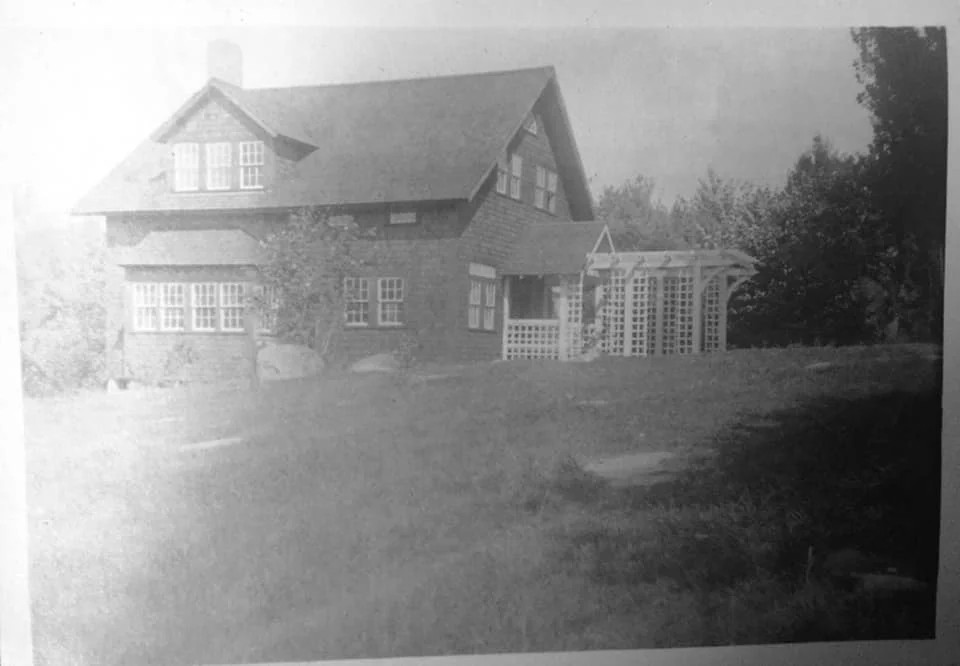
Elizabeth Ford Holt in front of Jungle House 1905

The establishment of Camp Mowglis was the result of the convergence of the positive experience of a young man at a camp, his mother’s vision, a famous author’s imagination, and association with her friends who knew, loved, and purchased land around a beautiful lake. The camp movement had just begun, promoting vigorous outdoor experiences for urban children. Elizabeth Ford Holt was among the earliest to buy property to start a girls’ camp (Redcroft 1900) and, up the road, a boys’ camp (Mowglis 1902).

1903

The Kipling Connection

The Kipling Connection
Kipling Portrait - Elizabeth Ford Holt

Mrs. Holt received permission from Rudyard Kipling (who had lived in Vermont) to use the Jungle Book theme and names of characters to define the Camp’s identity. It was, however, more than a theme, it was the spirit and the philosophy that permeated the activities and culture of Mowglis. Kipling suggested the use of the plural form of Mowgli (Mowglis) given the number of boys who would attend.

The Boys

The Boys
All Camp 1903

Our first season had an enrollment of 10 campers. There was a great deal of interaction amongst Mowglis, Redcroft (Mrs. Holt’s girls camp), and Pasquaney, including beating Pasquaney our first summer in Baseball! The activities during Mowglis’ early years were largely sports, hiking, fishing, and swimming. The first summer included a crew race using boats that resembled large rowboats with four oarsman (two rows of two, side by side) and a rudder-man. There were no lights, well pumps, or refrigeration in 1903. In fact, there was no electricity at all.

Poem by Elizabeth Ford Holt

Mrs. Holt wrote the poem, “There’s a Trail that Thou Must Follow,” which became our first song, followed by “The Graduates’ Hymn.” 1903 was also the first ‘Sports Day’ and the first recognition of camper achievement in the ‘General Excellence Boy’.

General Excellence Award
1903-1924

The Holt Era

The Holt Era
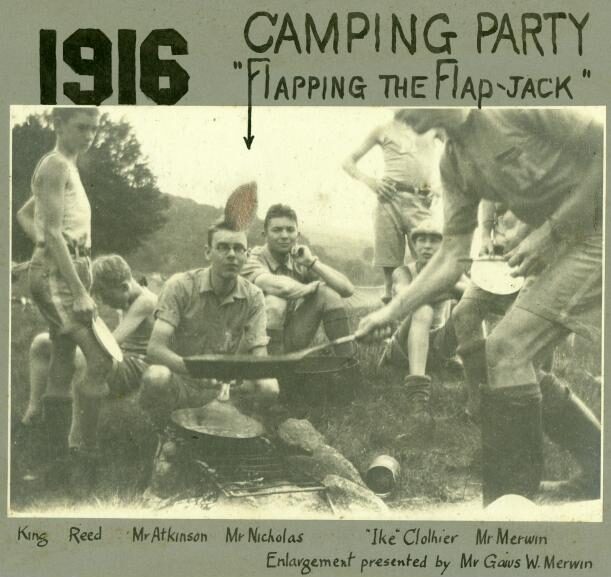
Camping Skills 1916

Mrs. Holt focused on designing the program, recruiting staff and boys, blazing trails, and raising dormitories and infrastructure. Most of today’s buildings date from her era. Hiking, singing, watersports, 15-mile walks to Plymouth for haircuts(!), crew and the multiday Long Trip were all features of a boy’s summer, many of which remain. It was also during this time that the Cub program for younger boys was born. Go to THE HOLT ERA to learn more about how the Camp grew and boys lived at Mowglis more than a century ago!

1904
Horse-drawn wagon

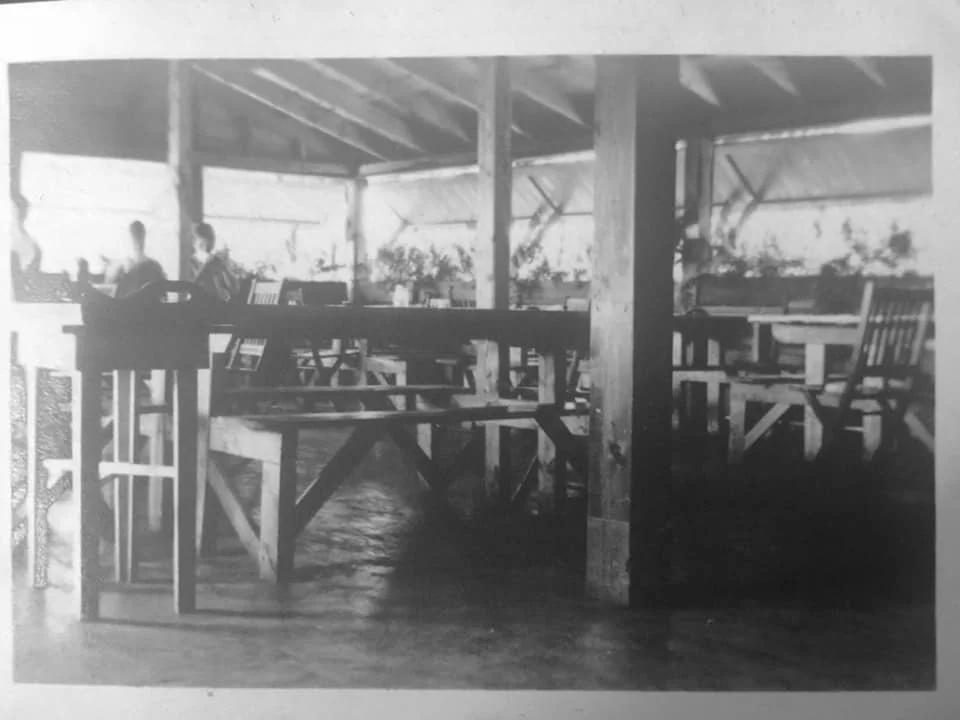
This was a time of building. The center of the old Sugar House was renovated with windows, doors, and a floor, initiating what would become the Den, named for the home of the Pack in the Jungle Book. An outdoor Dining Room was built on the west side of the Jungle House. With few trees, the boys and staff could clearly see Bear Mountain, the Big and Little Sugarloaf, and beyond. Land was levelled for the Upper Tennis Court. The Campfire Circle was created and became an enduring feature of camp life. A large barn and a poultry house were built. Mrs. Holt’s son Ford became Assistant Director, under whom the boys and staff walked eight miles to Plymouth for haircuts and ice cream, and then walked back! The only vehicle at the time was a horse-drawn cart.

Ford Holt
1905
The Lair/Kipling

Three junior staff – Alcott and Bruce Elwell and Louis Grandgent – lived in Khaki Tent, the site of the modern-day Panther, named after Bagheera. From the tent platform, Alcott Elwell (later Colonel Elwell) was able to touch the top of an abutting 12’ Pine. This would become the iconic ‘Colonel’s Pine.’ The Lair, also known as Cub House, Club House and Bug House, was built as a dormitory near the Cave. During this period, the Jungle House was further expanded with the addition of two living rooms. An old boat house from Masquebec was skidded across the frozen lake in winter to become the center portion of Waingunga, initially located on the future site of Hope-To-Be. Other firsts were ‘The Long Trip’ to Waterville and a 3 ½ Horsepower ‘Launch,’ the first gasoline motorboat on the lake.

Waingunga
Jungle House with Elizabeth Ford Holt
Baseball 1905
1906
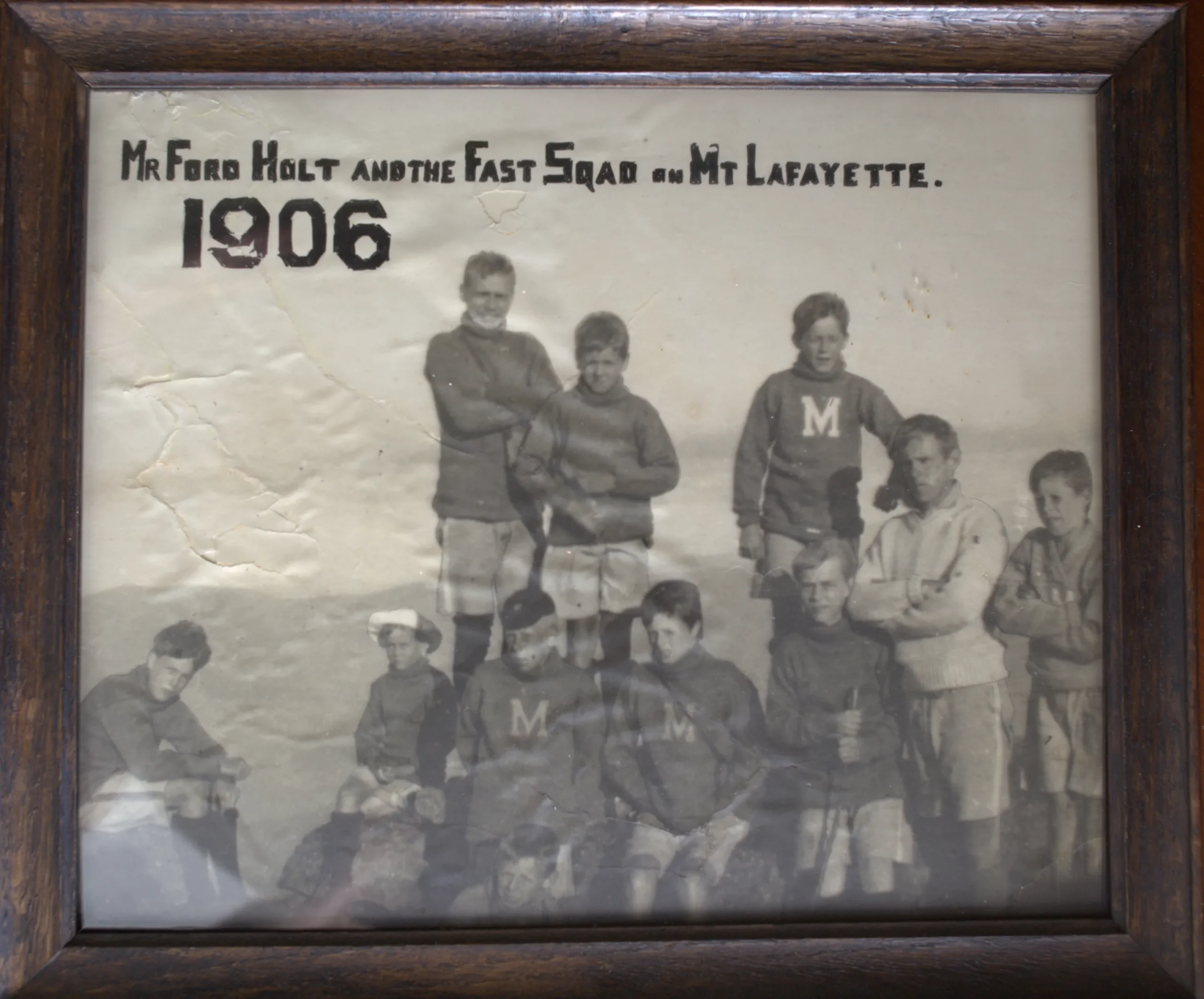
Ford Holt and Fast Squad on Mt Lafayette 1906

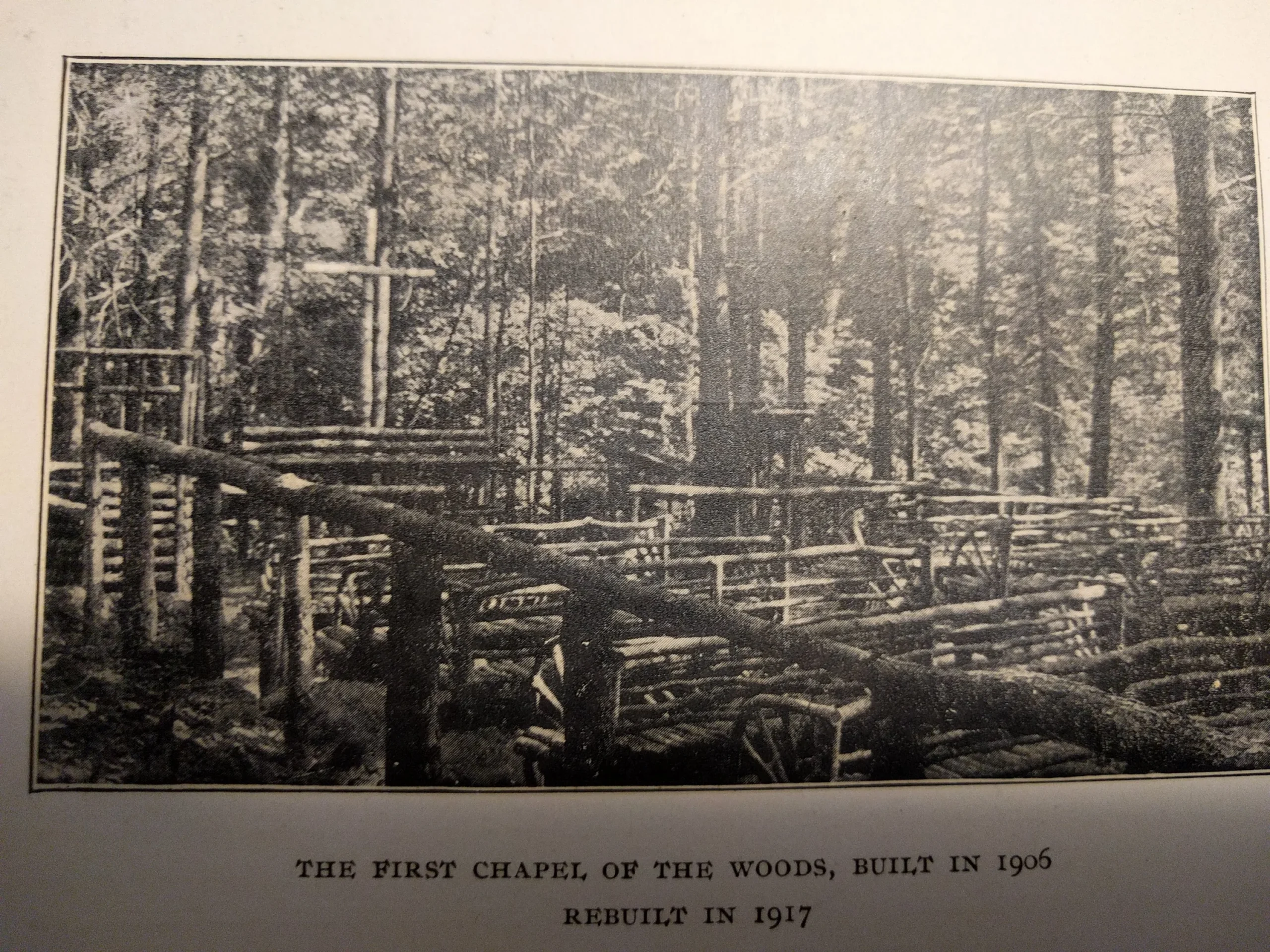
The enrollment had surged to thirty-three boys filling three wooden dormitories – the Cave, the Lair, and the Den and the Panther tent. Over a period of two months, men built Gray Brothers Field by hand, and land was cleared for the first Chapel in the same location where it remains today. Camp activities continued including baseball, water sports, hiking, and Long Trips.

Chapel in the Woods
1907
First Howl 1907

The first Howl was published. Reading it now, you will notice that there are no photographs or writings from the boys, but it reflects the existence of Duties and Inspection, reading in the dormitories, a synopsis for every day of the summer, and the names and addresses of all the campers and staff. Most significant is Mrs. Holt’s exceedingly well-written vision and philosophy for the Camp, and what could be expected for all who came. Hope-To-Be was built on the waterfront and the original part of Waingunga was moved to its current location. The center portion of Headquarters, which served as the early Council Room and Mrs. Holt’s Office, was built in its current location and the first Chapel was constructed, largely of wood. The Lantern House was built at the entrance to the camp property, and the Canoe House and Wood Working Shop were built near the present-day canoe racks at the Waterfront; all three now long gone.

Ford Holt and boys at Tri Pyramid Mt 1907
1909
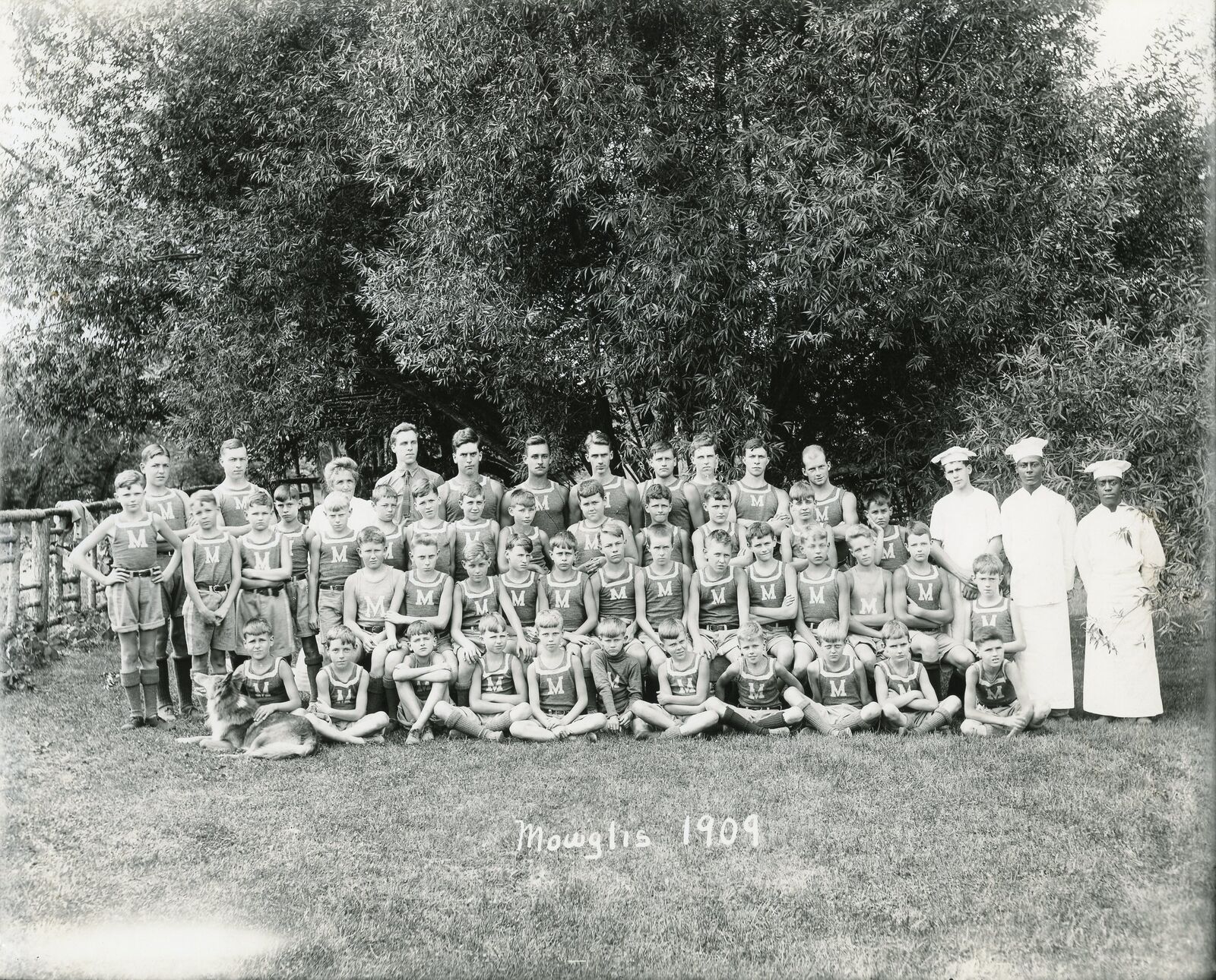
All Camp 1909

There were thirty-eight boys, again all of the staff coming from Harvard and Trinity. A rough road was carved out from the Jungle House to the lake, an addition was made to the south end of Den, and a tent called Toomai was erected near Ford Hall. The first ‘Fancy Dress Ball’ was held in Kipling, and the baseball team beat both Camp Wachusett and the Hebron “Speed Kings.”

1910
Crew Race 1910

Crew races were in full swing using 4 rowers and a rudder-man. The Upper Ball Field was built, complete with a baseball diamond. Challenges still remained as players dodged significant boulders in their paths! The poultry house was converted into Cook’s Cottage and Mang, named for the bat and originally a cowshed, was converted into staff quarters.

Den 1910
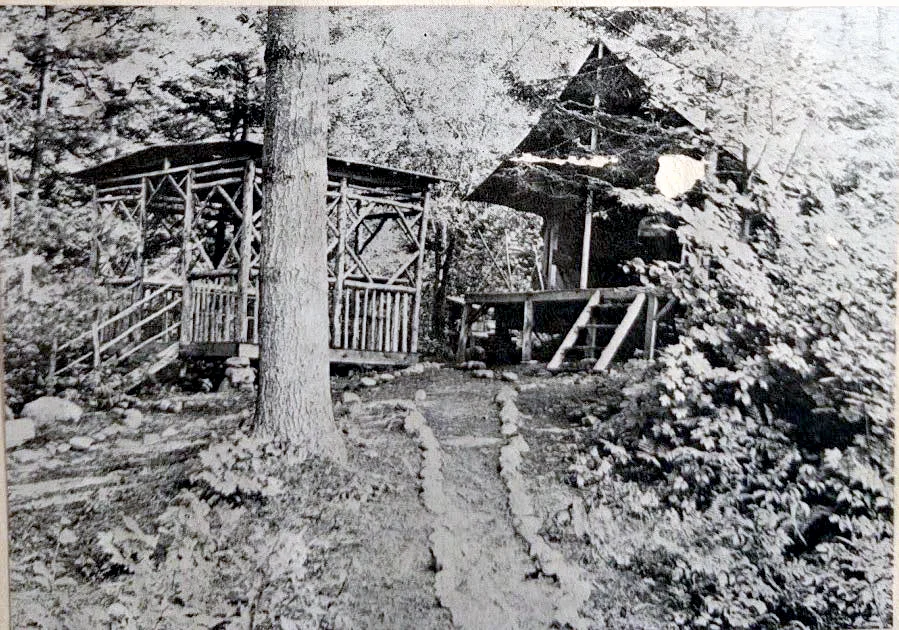
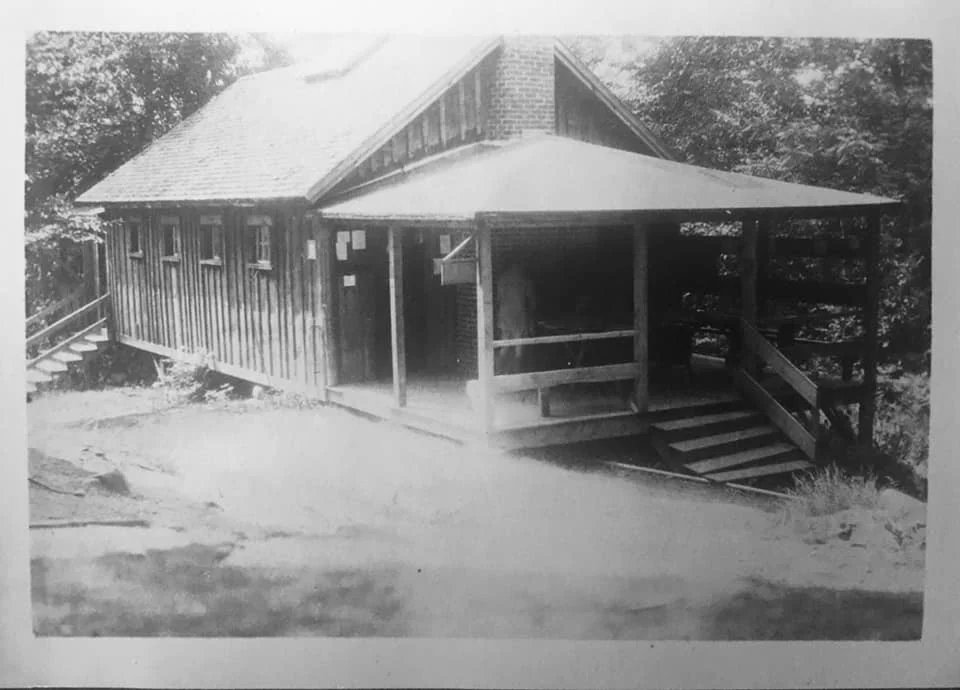
Writing porch 1910 Panther tent
Mang 1950
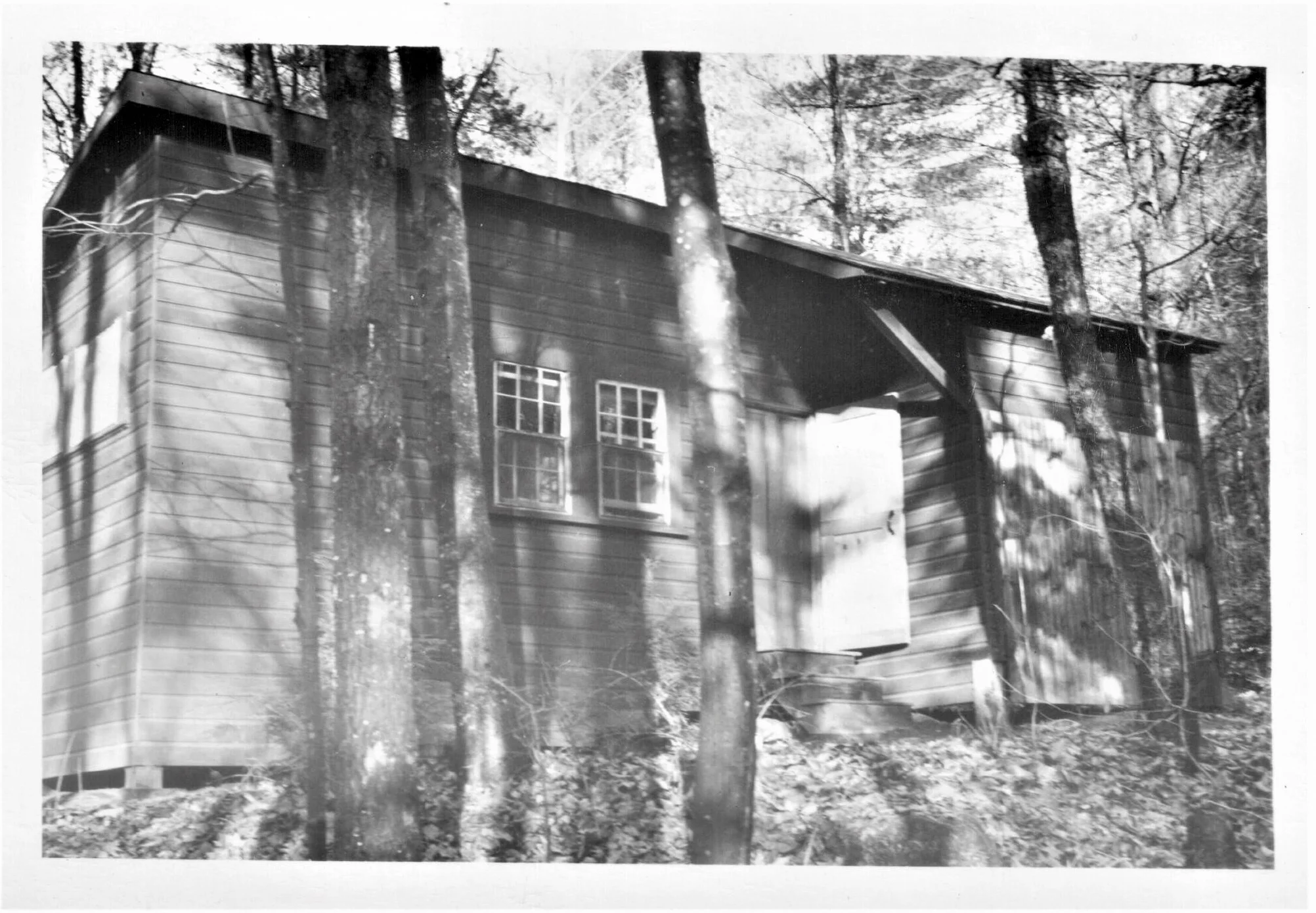
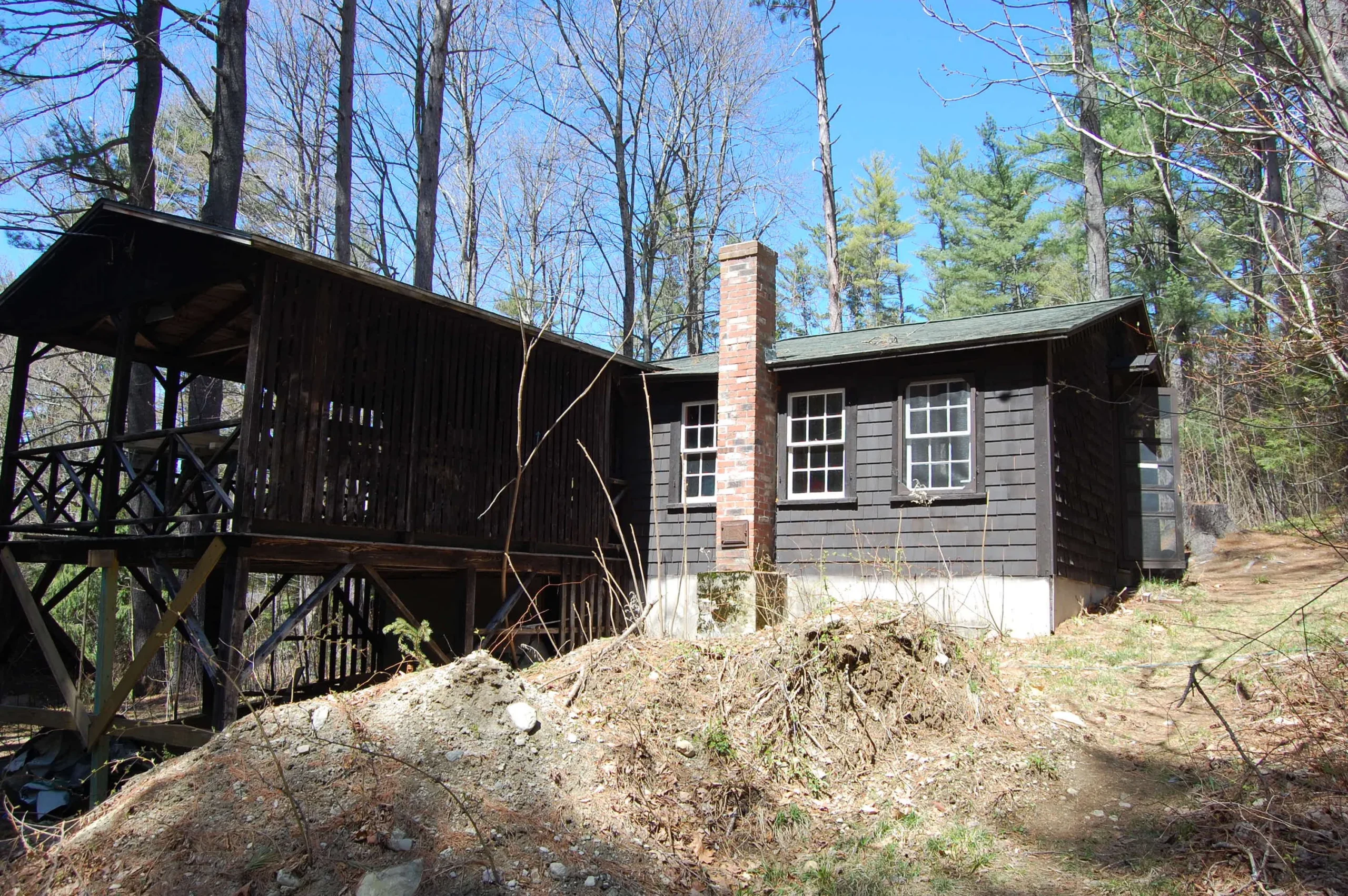
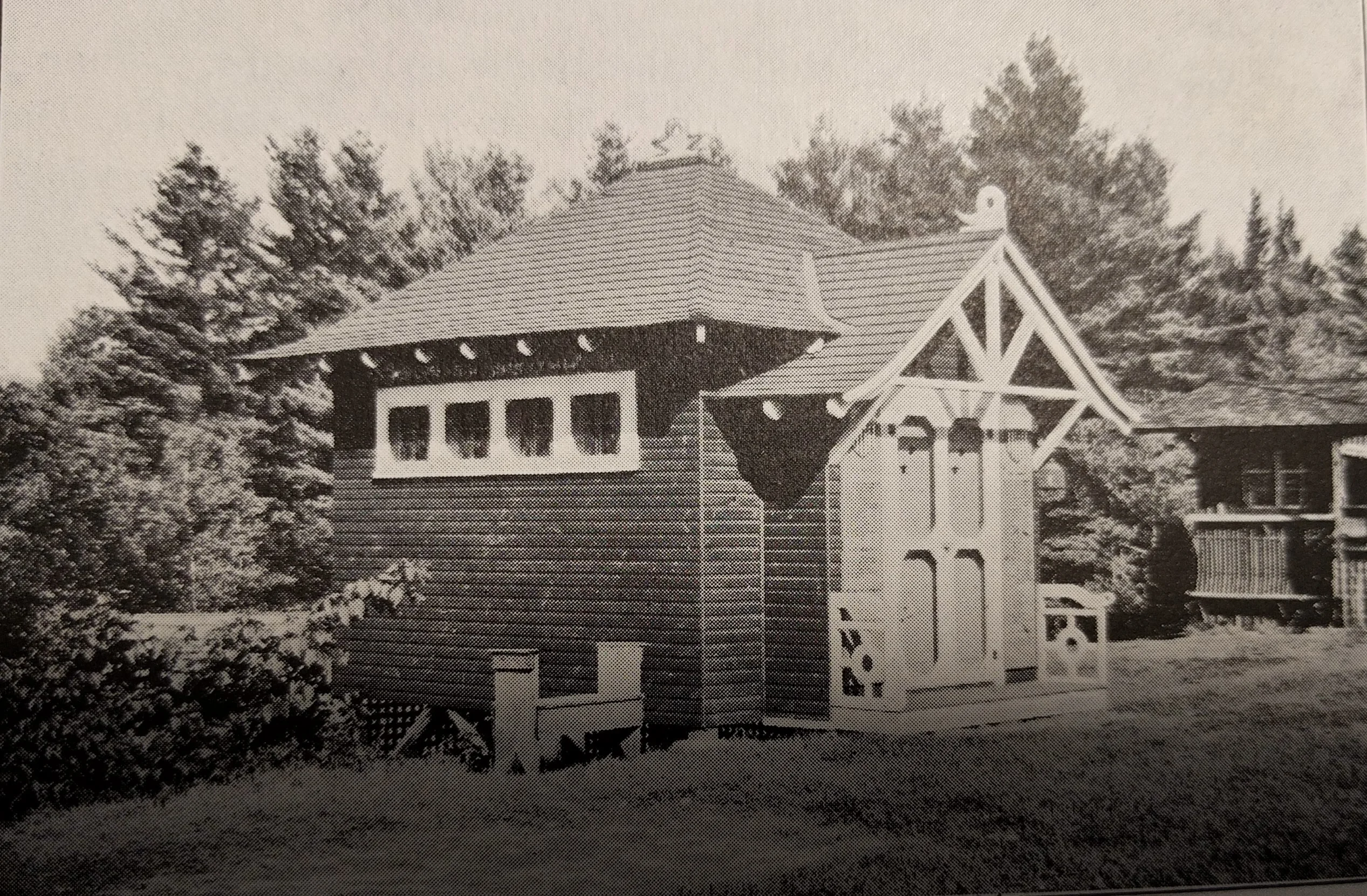
Cooks Cottage (contemporary)
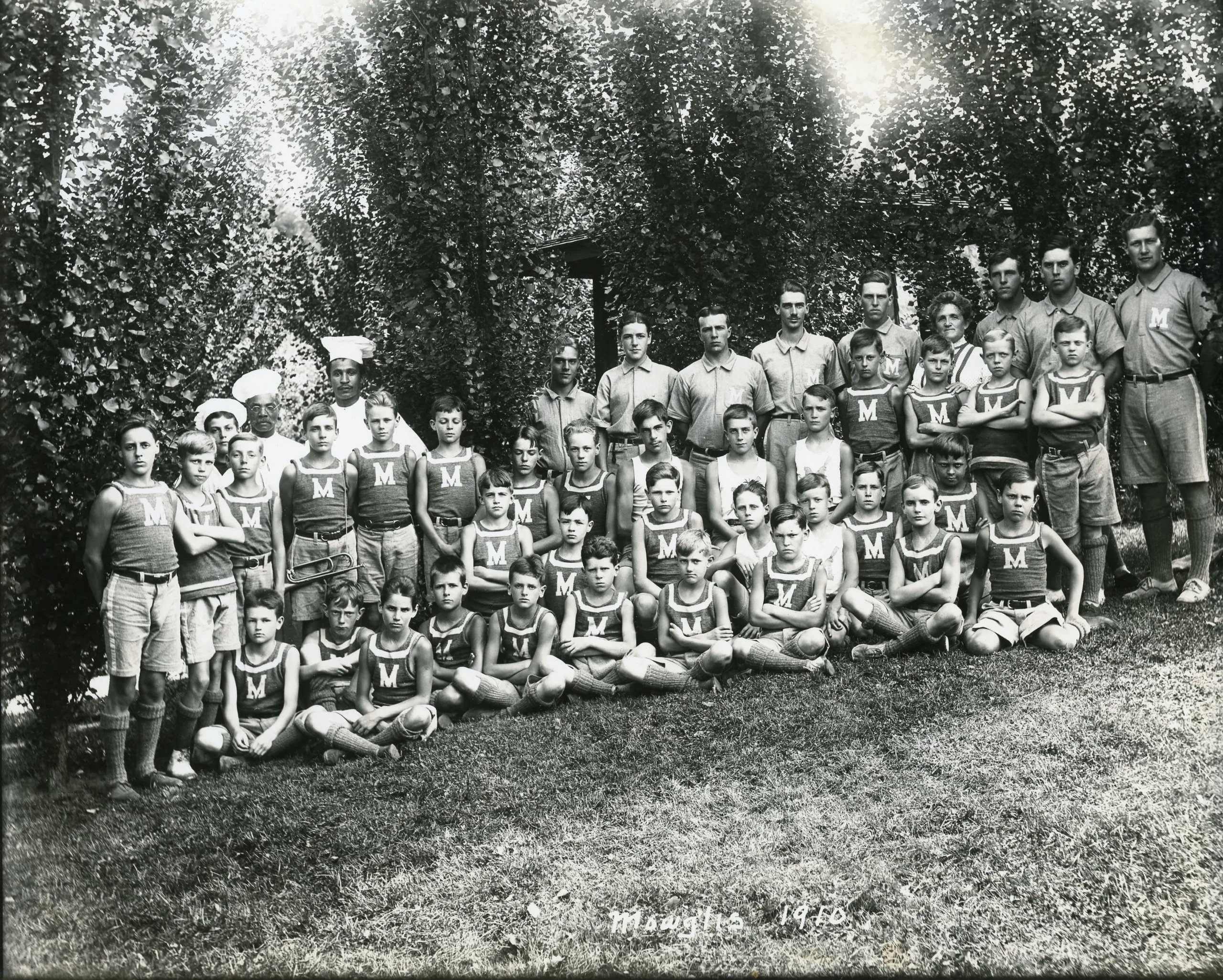
All Camp 1910
1911
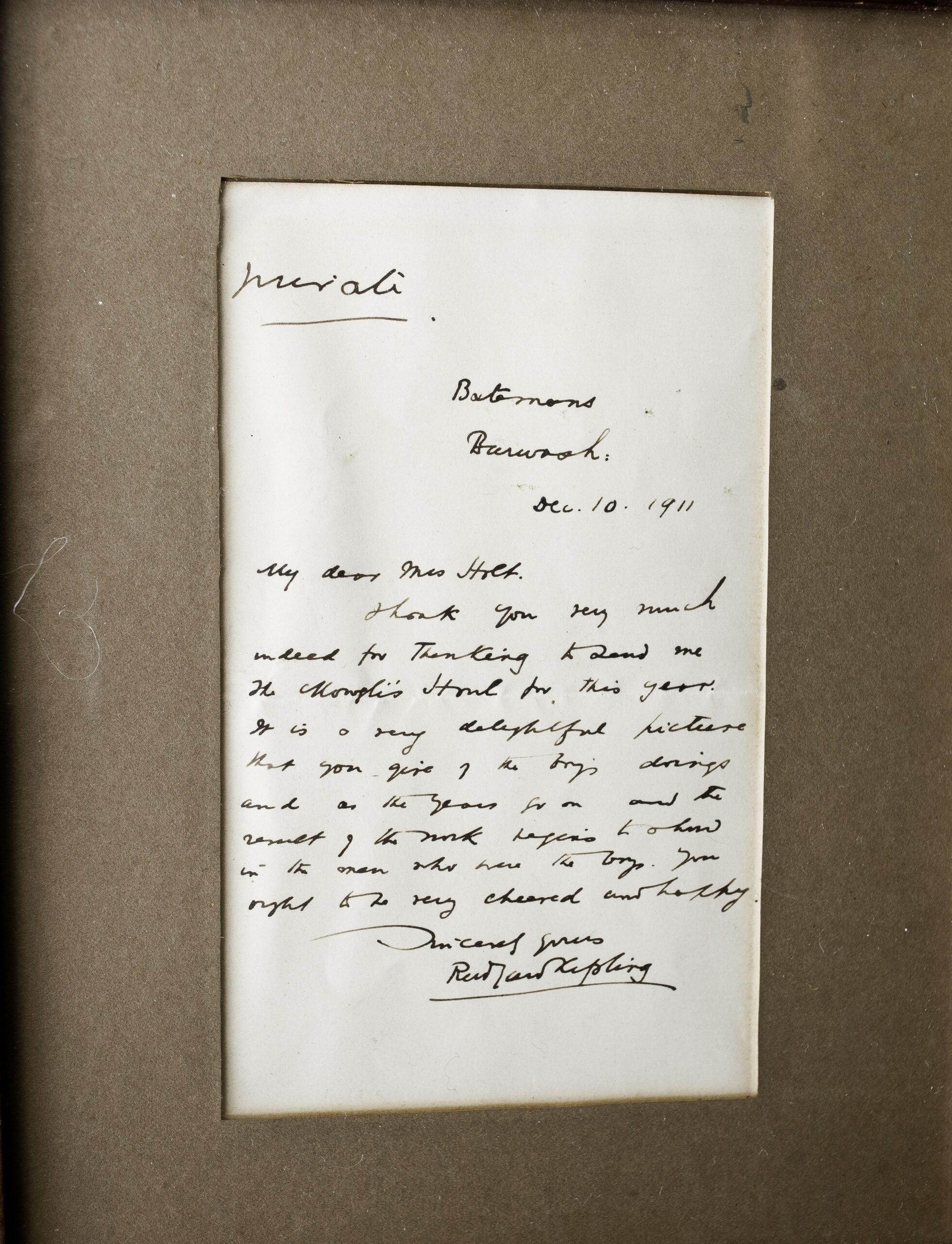
Kipling Thank you letter 1911

Upon receipt of the Howl, Rudyard Kipling wrote to Mrs. Holt that “results of [the Camp’s] work [will] show in the men who were the boys.” Mowglis received two custom-made crew boats that initiated a more robust rowing program; the Camp divided into the Red and the Blue. The First Ice House was built to store the ice that was cut from the lake each winter and stored to keep foods fresh in the summer.

Jungle House 1911
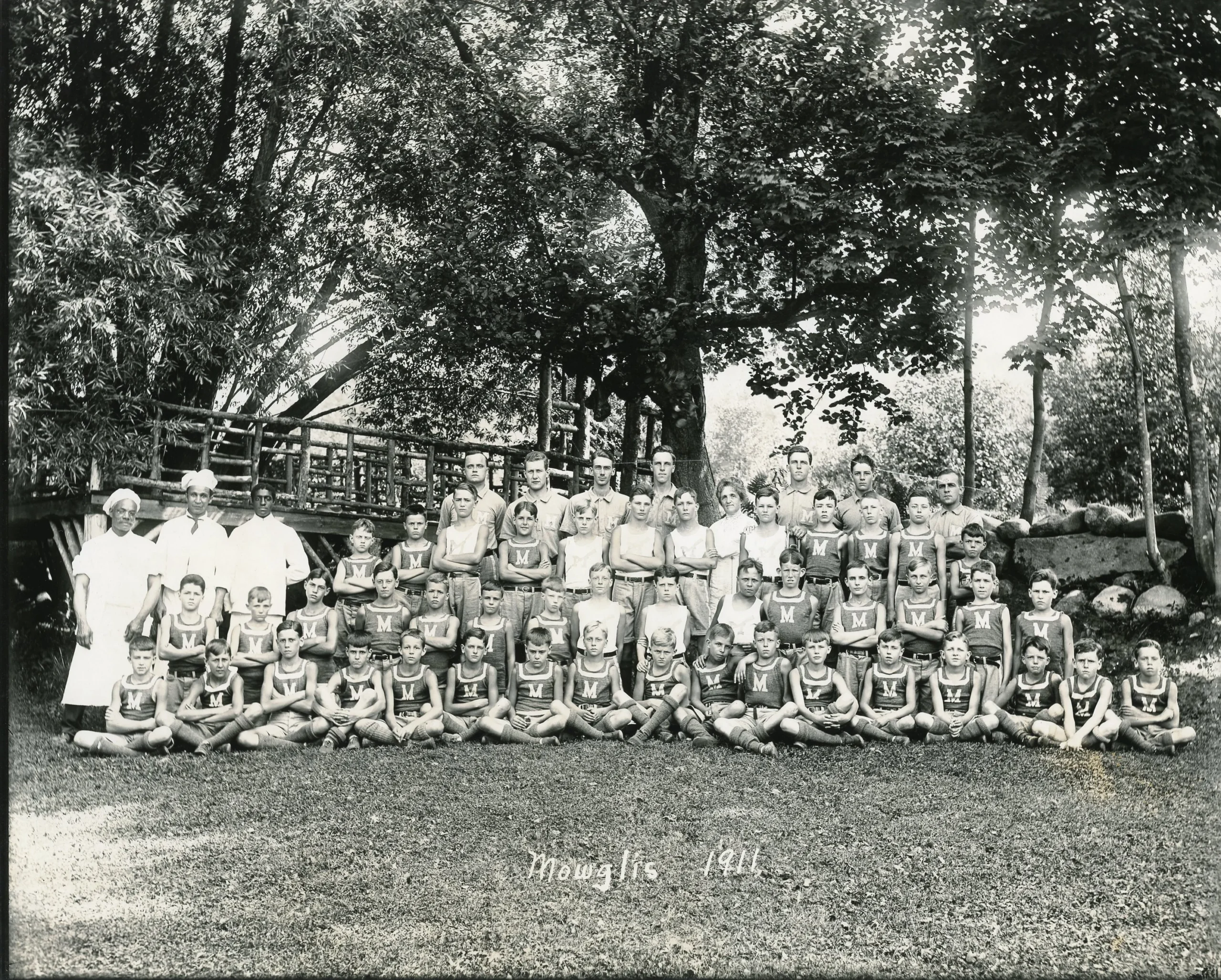
All Camp 1911
1913-1914
Pump House (contemporary)

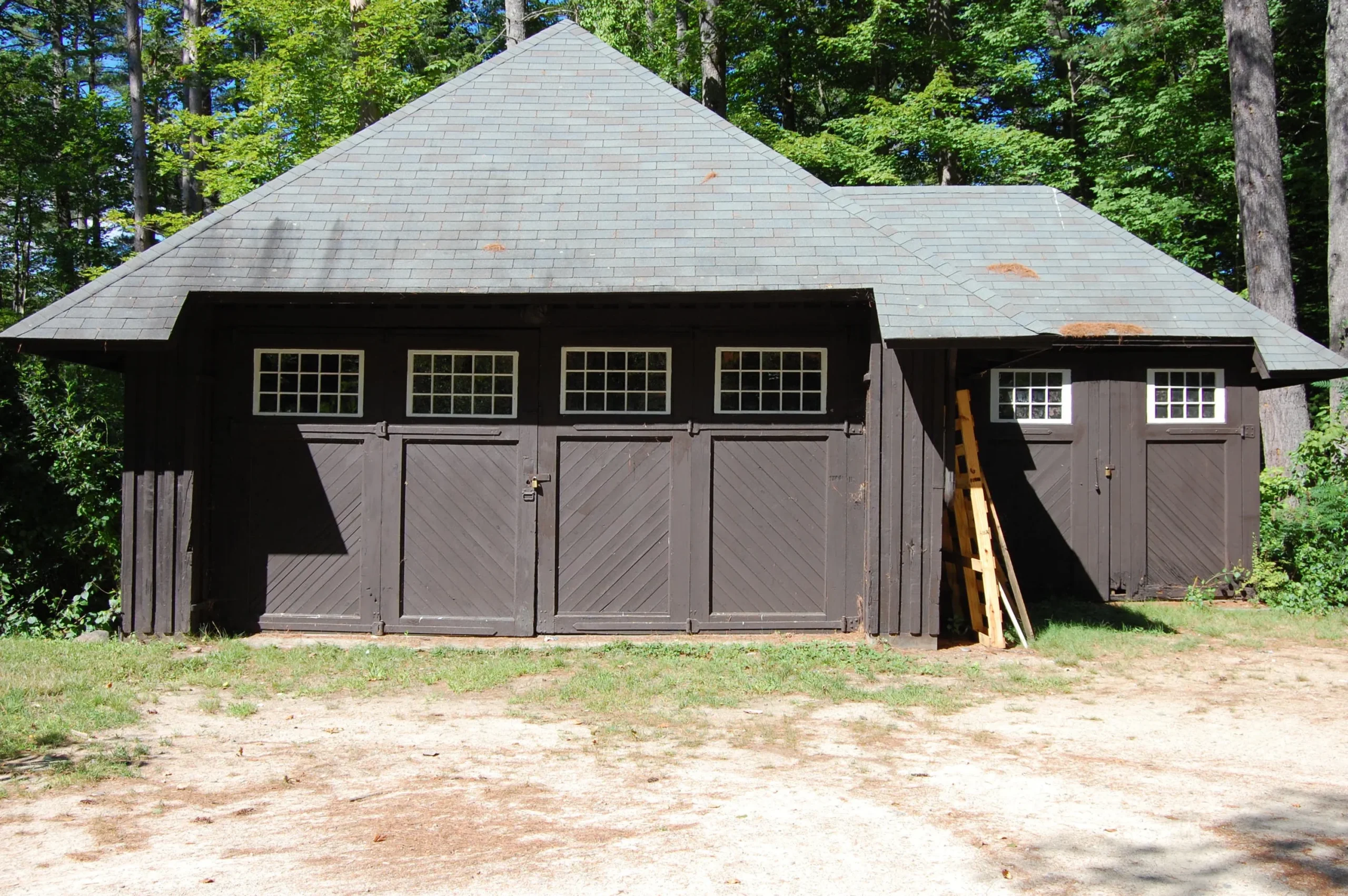
A 2,200-gallon water tank and a pump were installed to eliminate the need to carry water from the lake and a pump house was built to shelter the pump. (1913) Both still exist as emergency water supplies . The Garage was built in 1914. The entire Camp walked to Mt. Chocorua, excepting for a boat trip to cross Squam Lake (1913). Though boys in early years came predominantly from Boston, in 1914 Mowglis extended its reach to Omaha, Chicago, Cleveland, and Indianapolis. 1914 also saw the first ascent by Mowglis boys of Mt. Washington.

Garage (contemporary)
1915
Craft shop

A fourth dorm, Toomai, named for the elephant handler, was built as was the Craft Shop and the Weather Bureau House. Weather proved to be an extremely popular industry.

1917
Kipling

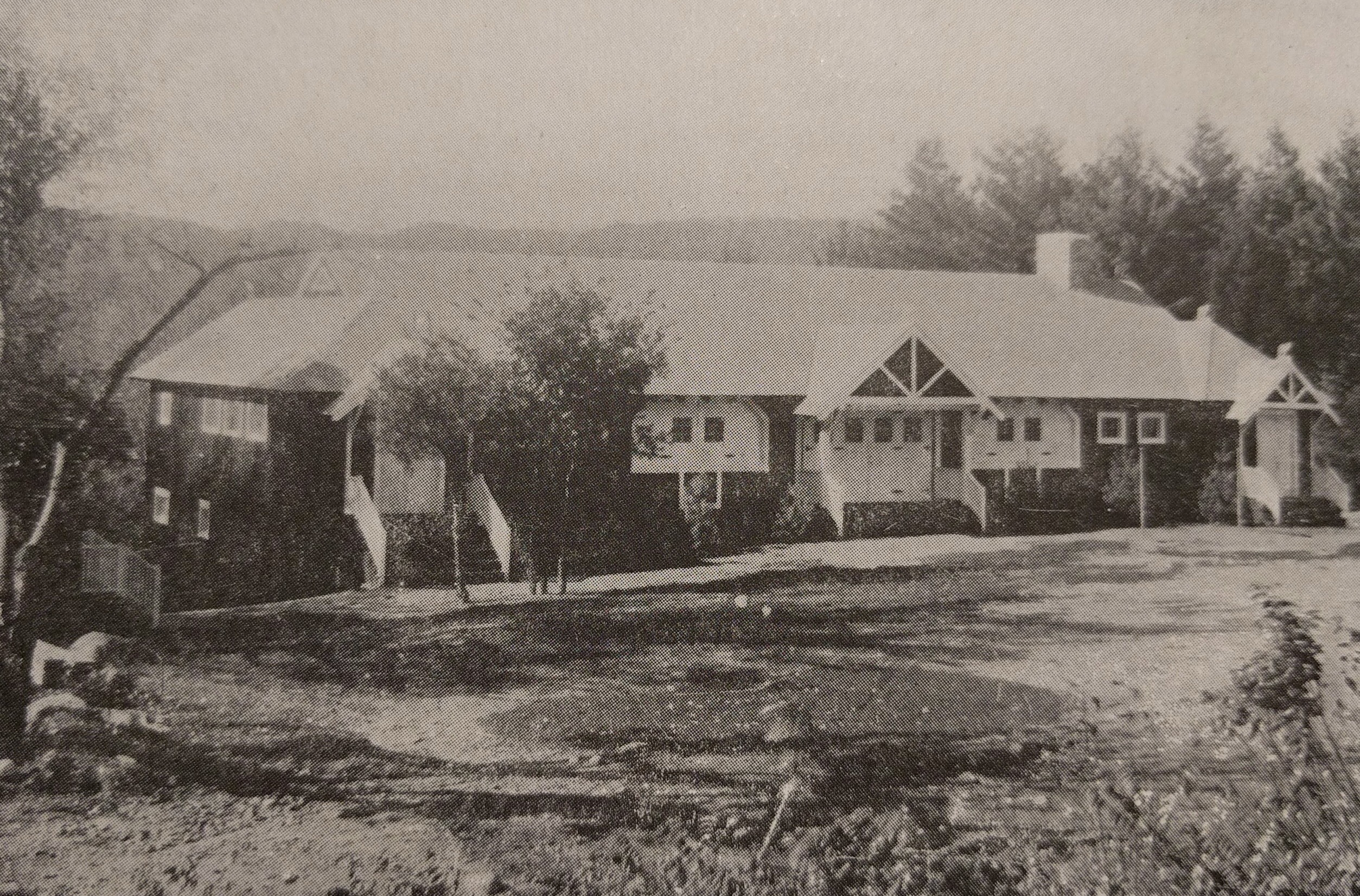
Kipling was expanded and the Chapel was improved with substantial benches and a wooden tower with a bronze bell named for Mathew Baird. A recent graduate, he spearheaded the casting of the bell from melted coins collected from boys and staff.
“Ring Chapel Bell, through Jungle Woods. Ring out the shadow of Shere Khan. Ring in the Brotherhood of Man. Ring, Ring your message through these woods.”
– Elizabeth Ford Holt

Chapel with Bell Tower
1917-1918
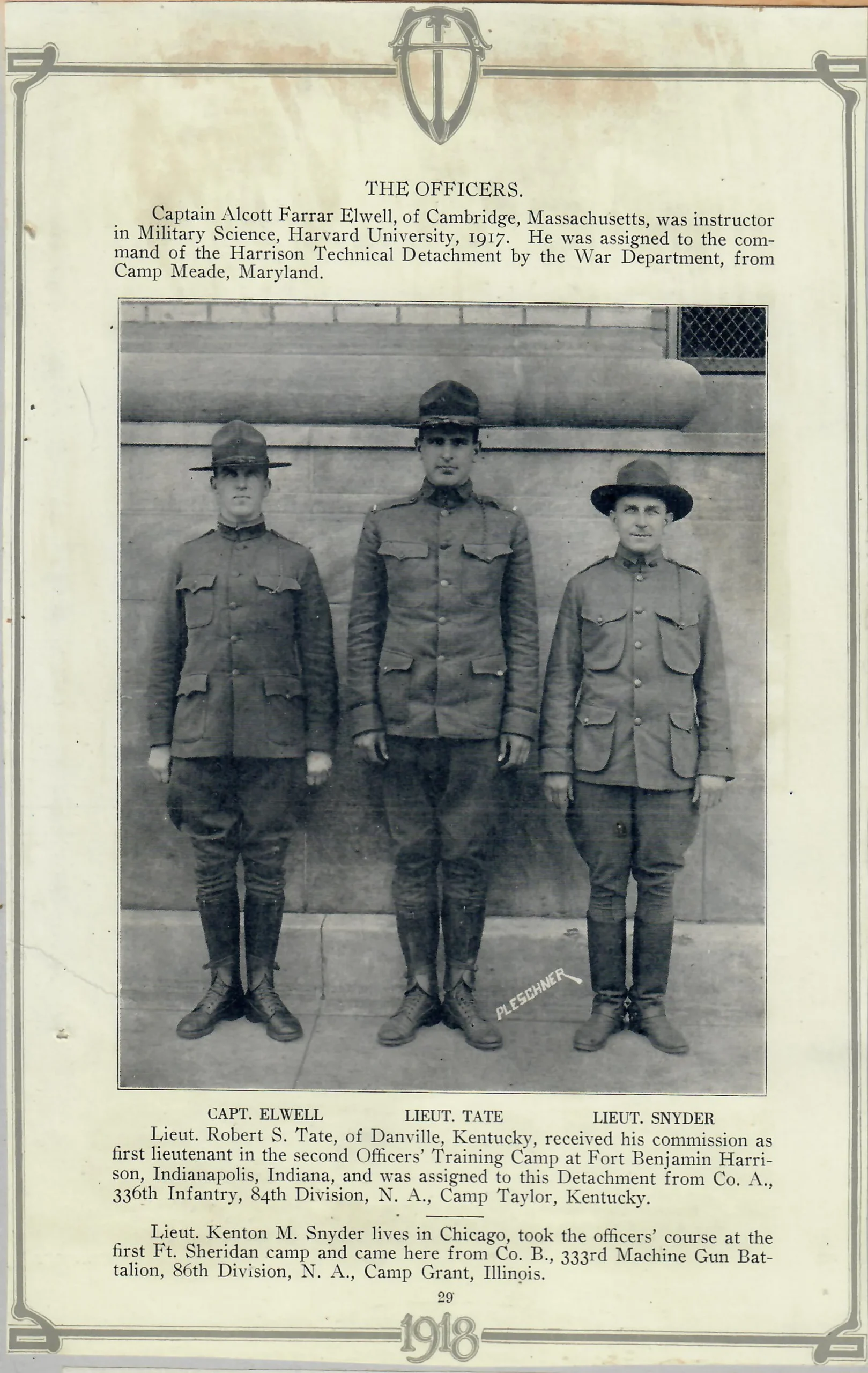
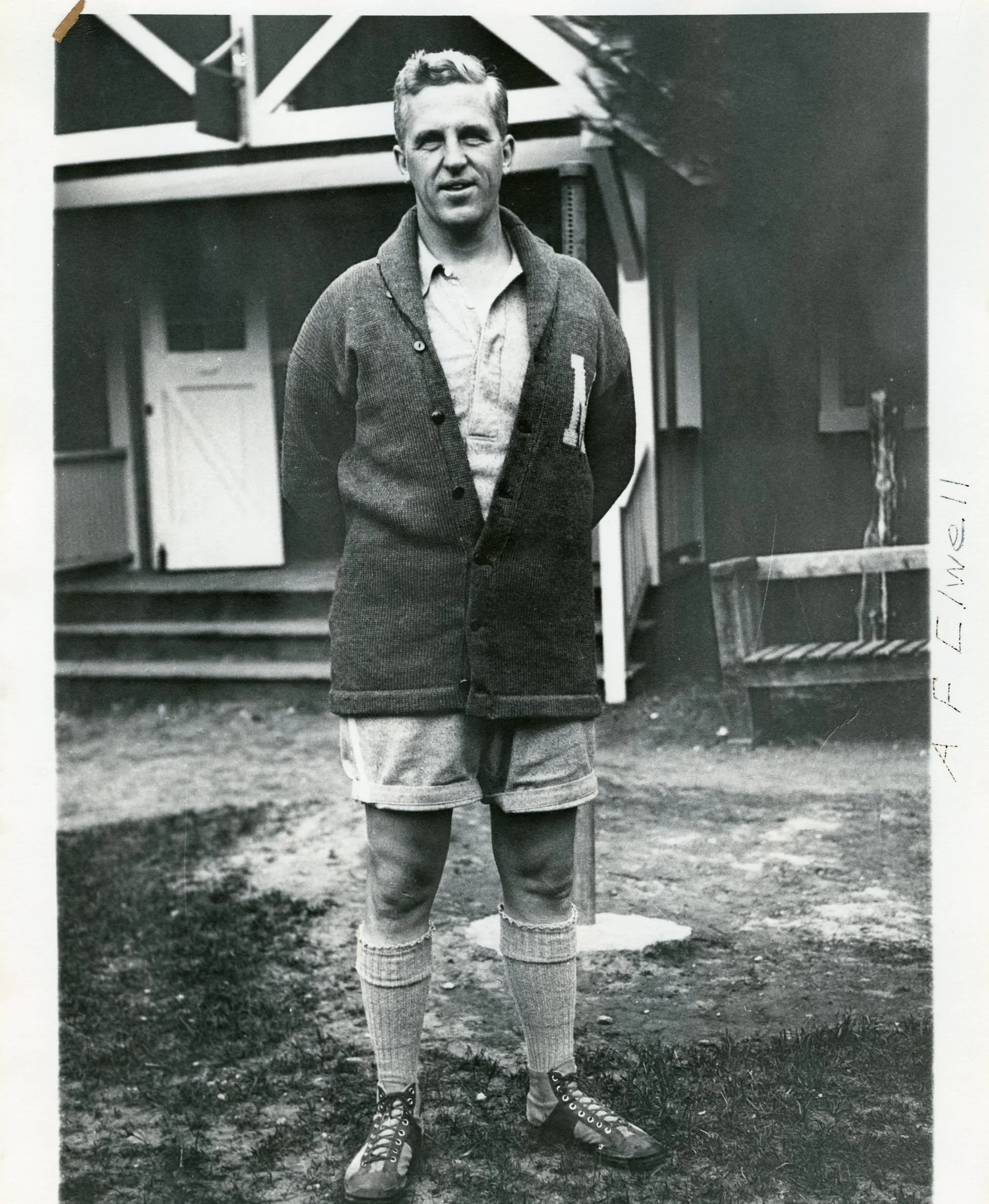
Capt. Elwell 1917

Eighty Mowglis alumni as well as Asst. Director Capt. Alcott Farrar Elwell served in World War I.

1918
1918 Baloo

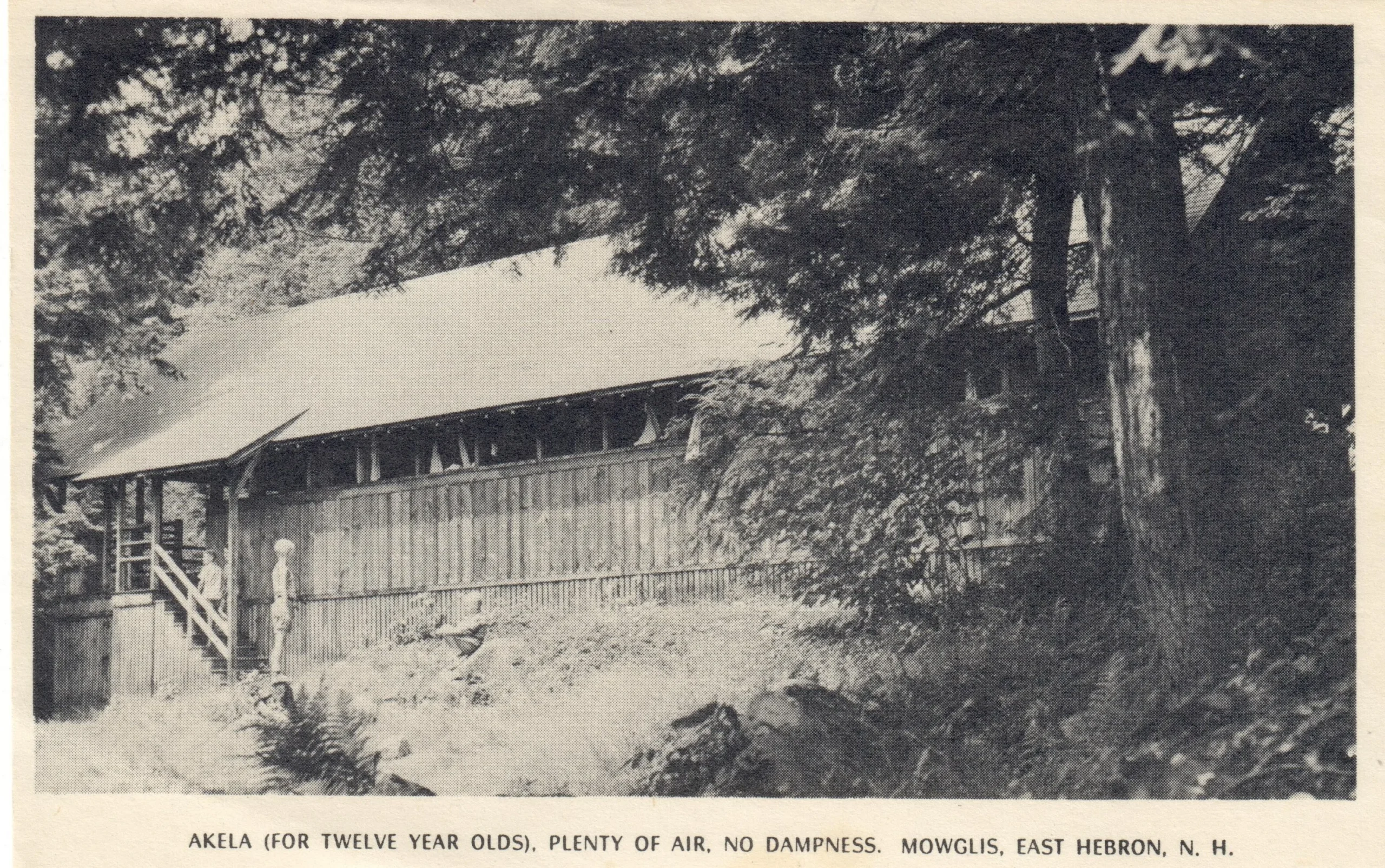
Baloo, named for the old wise bear who taught the wolf cubs the Laws of the Jungle, was built to replace a tent and the barn was transformed into the Lodge (Infirmary) by Stanley Elwell. The Jungle House Dining Hall and kitchen were vastly enlarged to their current configuration.

Lodge shortly after it's conversion 1917
1918 All Camp
1918 Exterior of expanded Dining Hall Jungle House
1919 Interior expanded dining hall
1919
1919 Honor House

The Honor House was built to commemorate the veterans of World War I. Housing photos of men and battlefield souvenirs; it originally stood on the current site of Gray Brothers Hall. The Inner Circle was created, and the Athletic House was built to store equipment near Gray Brothers Field. Col. Elwell became the Assistant Director.

Campfire with Inner Circle 1922
1920
Red Cross House (contemporary)

A major programmatic shift occurred when Cubs, the youngest boys, were separated from the Pack, taking over Ford and Kipling Hall. The Red Cross house was built to allow for doctor visits, weights, and height measures; an indication of the concern for the development of healthy young men. The Den Song was written by C. E. Hadley.

Den Song
1921
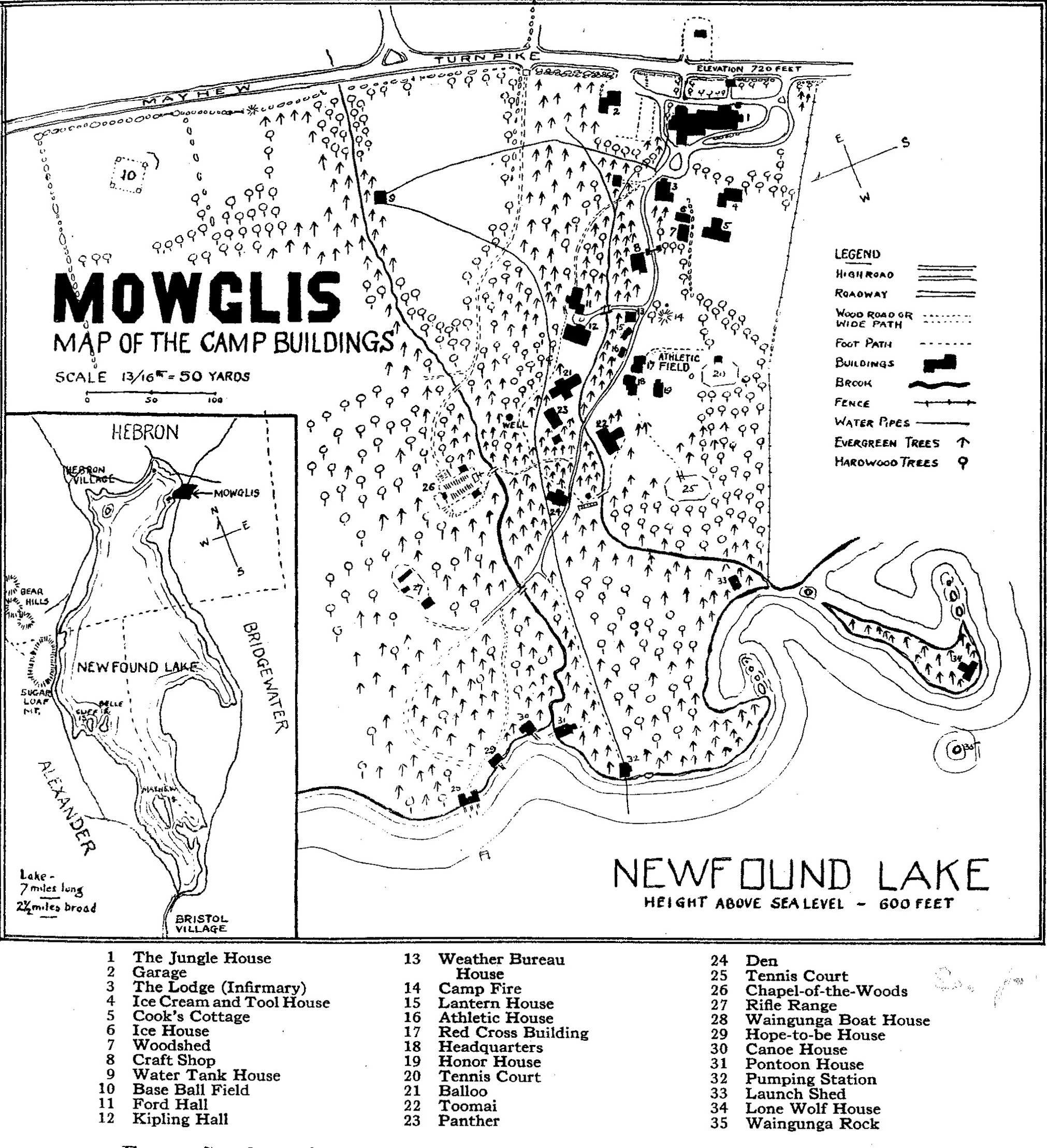
Map of Mowglis 1921

Cubland field and Campfire circles were built, thus completing a separate environment for the youngest boys. At the request of the New Hampshire Forestry Dept., Mowglis took responsibility for the Groton-Orange Trail, which had been obscured by wartime clear cutting. The US Geological Survey renamed the route the Mowglis Trail. This began a long tradition of Mowglis’ involvement in trail clearing and maintenance in the area.

1922
1921 Gray Brothers

Gray Brothers Hall, named for Mowgli’s cub-brother, was built. Col. Elwell established the concept of “industries” which though not academic, challenged boys to become knowledgeable and proficient in a range of activities. Ultimately a boy could earn a colored “Ribbon” aka Husky Mark as proof of achievement. Achievements, provided entry to the Inner Circle at Campfire. Industries still remain the backbone of the Mowglis program. Electricity came to Mowglis in 1922

1924
Wood Shed (contemporary)

Col. Elwell added “School of the Open” to the Camp’s name, to emphasize that Mowglis instills proficiency, not merely exposure, to a range of activities. The Wood Shed, aka the Axe Yard, was constructed.

1925
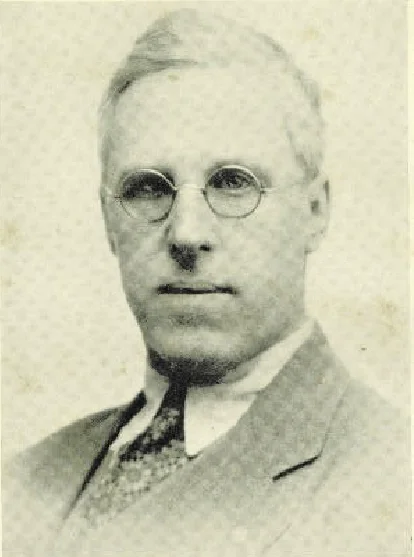
Portrait Col. Elwell and Mrs. Ford Holt

Mrs. Holt died February, 1925 and Col. Elwell became the owner and director of Mowglis. Elwell earned his Doctorate in Education from Harvard upon the acceptance of his thesis entitled The Summer Camp – A New Factor in Education. His philosophy of Education still permeates Mowglis traditions and culture.

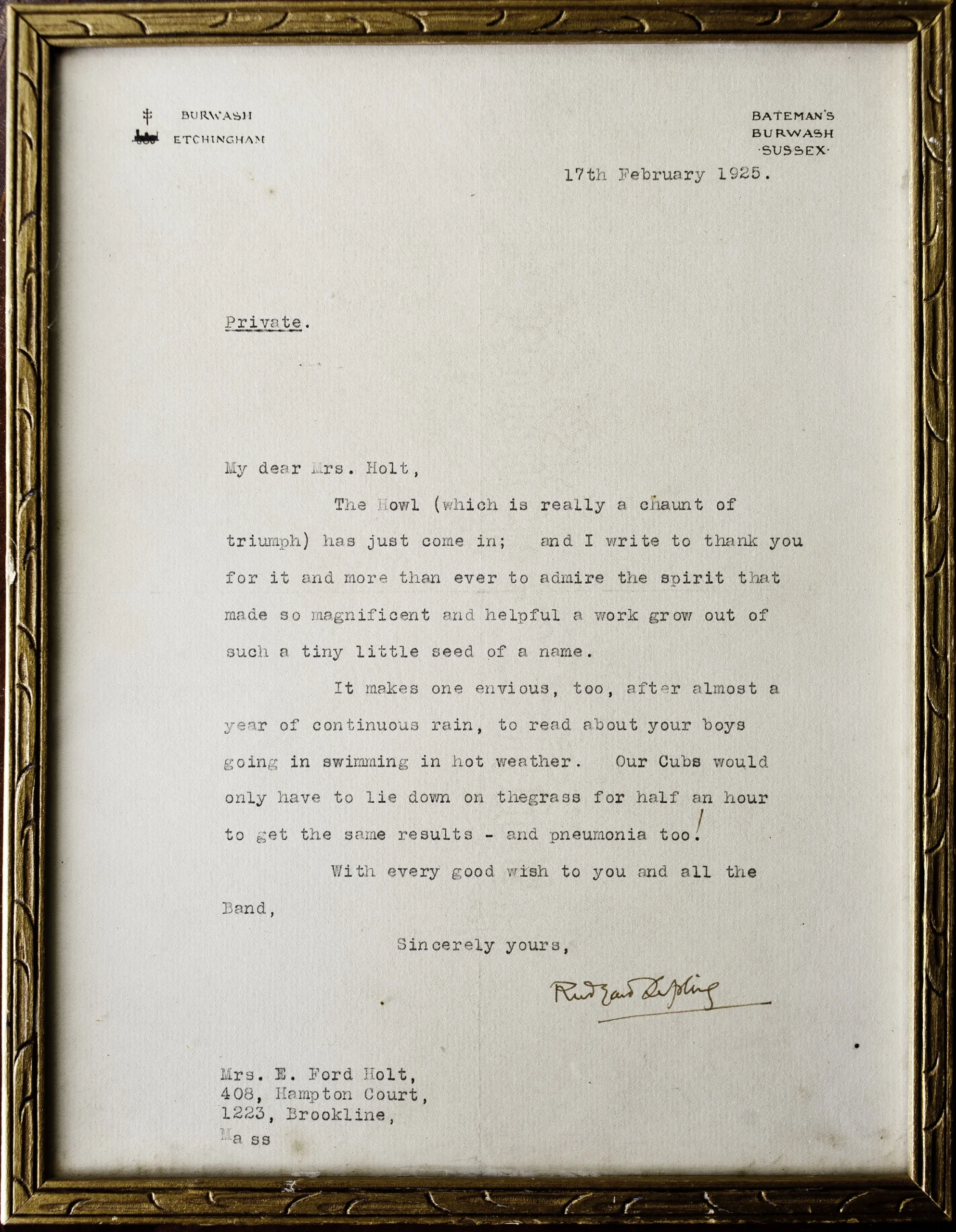
Letter from Rudyard Kipling to Elizabeth Ford Holt

Unaware of Mrs. Holt’s death, Kipling wrote that the recent Howl caused him to “admire the spirit that made so magnificent and helpful work grow out of such a tiny little seed of a name.

1925 All Camp
1925-1953

The Elwell Era

The Elwell Era
Trail Work 1929

Col. Alcott Elwell became Assistant Director in 1920 with Mrs. Holt and began to influence the development of the Camp program. His academic and military backgrounds are strongly reflected in the values Mowglis holds today. It was Col. Elwell who formalized “Industries” to develop boys’ in-depth skills in their chosen activities and who added “School of the Open” to Mowglis’ name. He became Director after Mrs. Holt’s death in 1925. Go to THE ELWELL ERA to learn more about camp life during that time including people like Wah-Pah-Nah-Yah!

1926
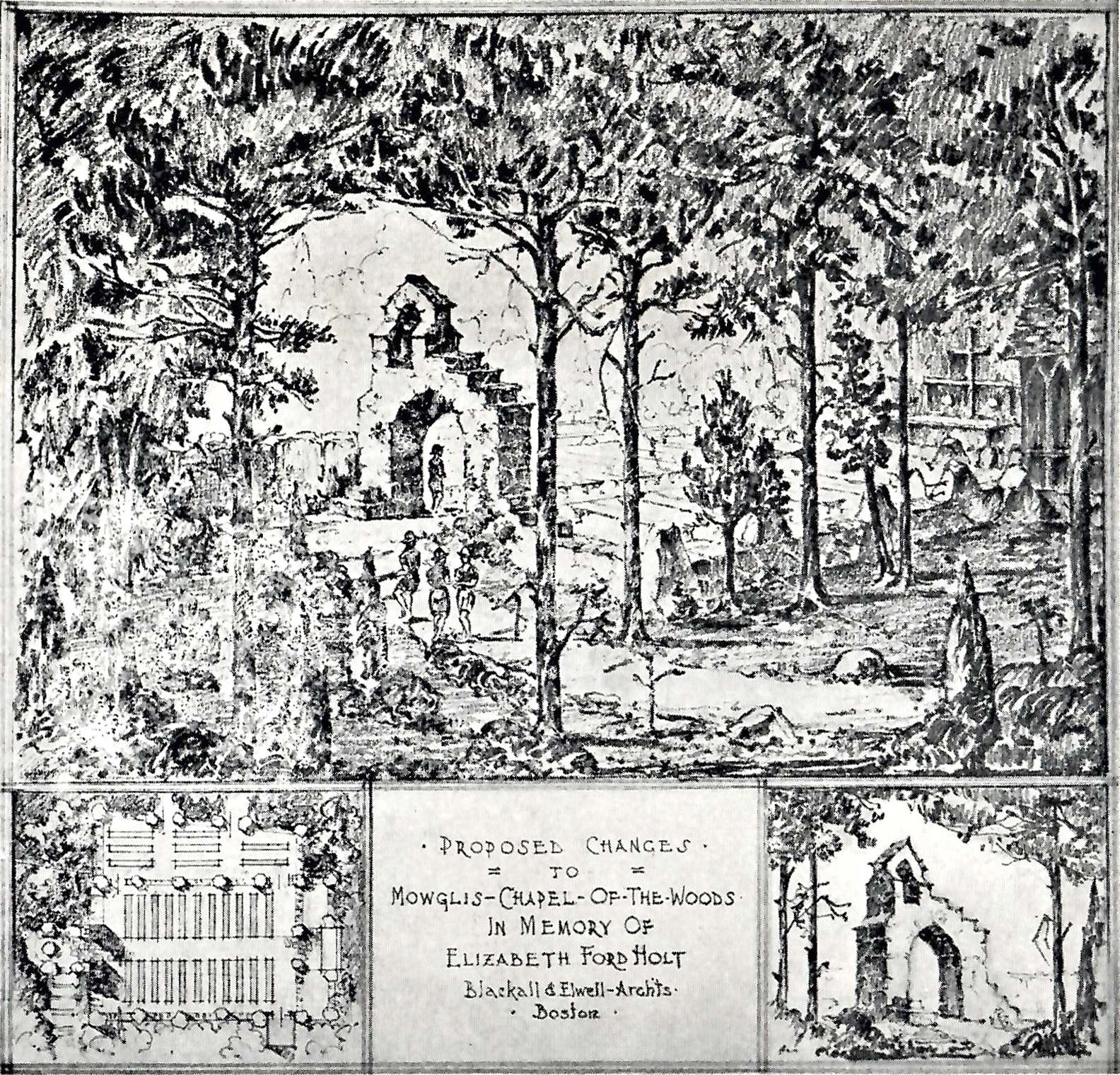
Architectural drawings of Chapel by Blackall and Elwell Architects, Boston

Changes were proposed for the Chapel of the Woods in memory of Mrs. Holt. Panther dorm, named for Bagheera the black panther, was built to accommodate older boys, replacing a tent erected in 1906. The Camp continued to thrive under Elwell’s direction.

Panther interior
Winning Blue Crew
Campfire Circle 1926
1927
Letter from Col. Elwell to Kipling

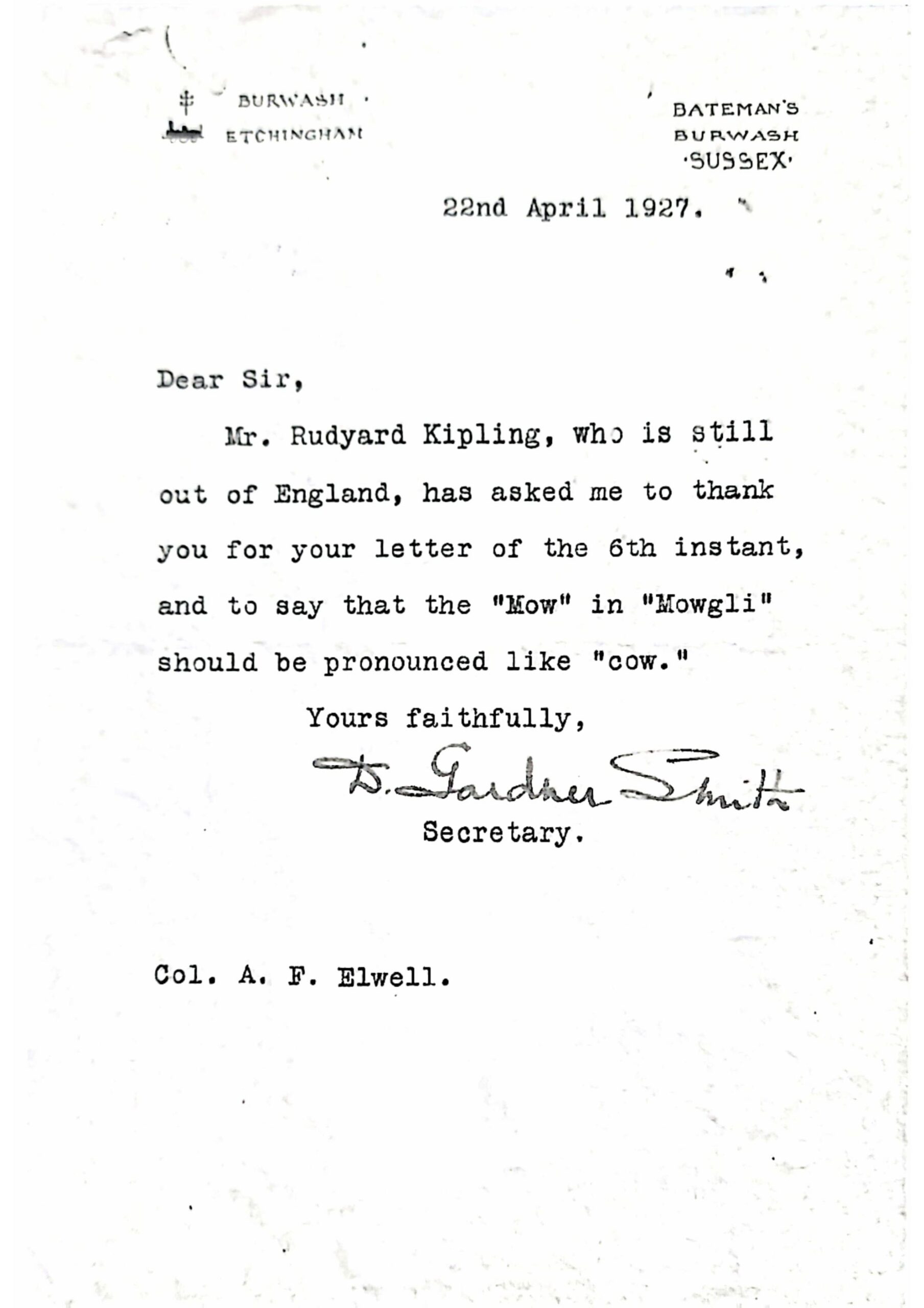
The pronunciation of Mowglis was a conundrum even in the early years as it remains today. Col. Elwell wrote Kipling requesting a definitive answer. Kipling’s secretary confirms that the first syllable of “Mowglis” rhymes with “cow.” In an earlier correspondence, Kipling had affirmed that the “s” in Mowglis is silent.

Letter From Kipling's secretary
1927-1928
Chapel of the Woods 1928

The present configuration of the Elizabeth Ford Holt Chapel of the Woods was constructed under the direction of Alcott Elwell, Gaius W. Merwin, J. Tyson Stokes and Stanley Elwell (architect). Built of stone, it featured a staircase, entry gate, retaining walls and upended boulders. The granite was obtained locally (Tenney Hill) and trees were harvested from Camp property for the benches. The new design included a memorial stone altar and the Baird Bell. The final cost was $3500.

1928

A Special Field Trip

A Special Field Trip
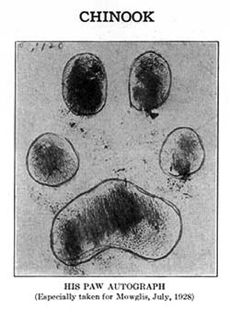
Autograph from Chinook, sled dog on Antactic Expedition

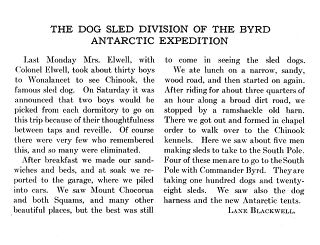
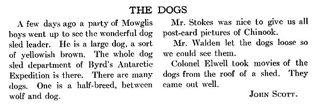
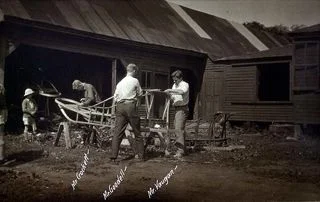
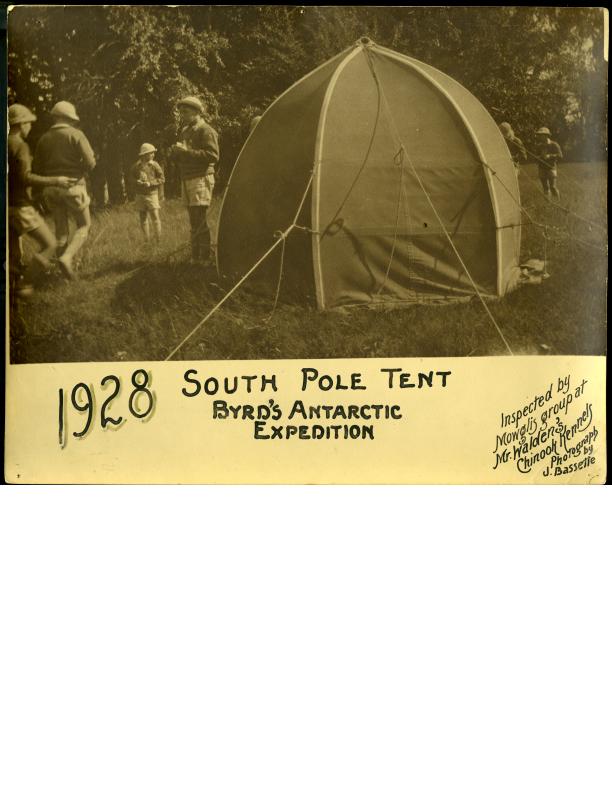
Ninety-four boys enrolled for the summer. Some twenty Mowglis boys and Col. and Mrs. Elwell visited the kennels in Wonalancet where sled dogs were in training for the Byrd Antarctic Expedition later that year.Camp photos document the awareness of and involvement in current events.

Lane Blackwell's Howl entry. 1928 Baloo
John Scott's Howl entry 1928 S. Kipling
Rawhiding the sleds
South Pole tents

Mowglis was deeply connected to major events in the world especially when they involved exploration and nature.

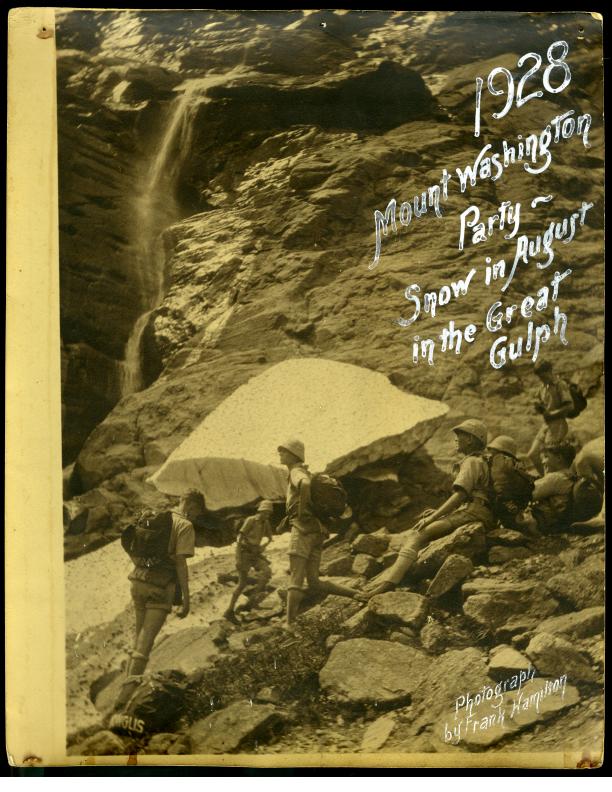
Mt. Washington hike

The Mt. Washington Squad enjoyed the snow in August on the upper reaches of the Six Husbands Trail. In the Howl of that year, it was reported that they enjoyed a snowball fight!

Hiking Song

The Mowglis Hiking Song’s lyrics were composed on the summit of Mt. Jefferson by William G. Land.

1929
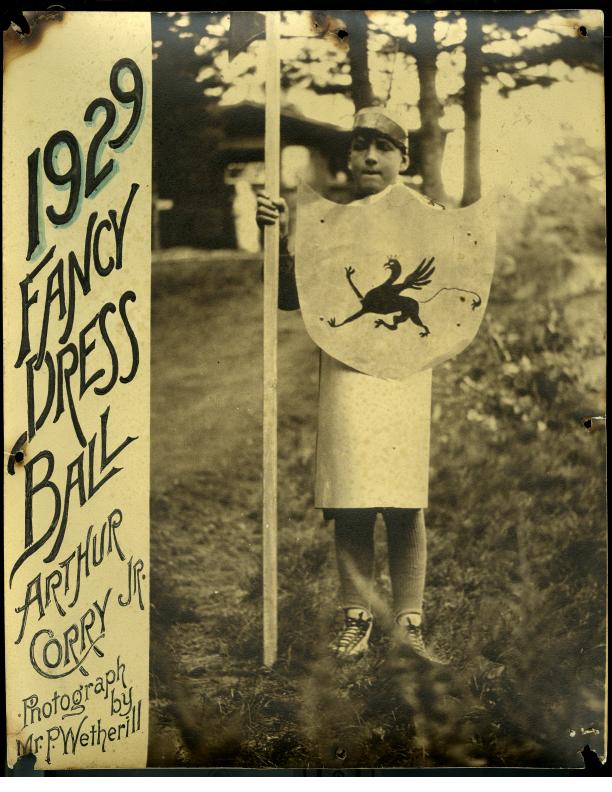
Fancy Dress Ball

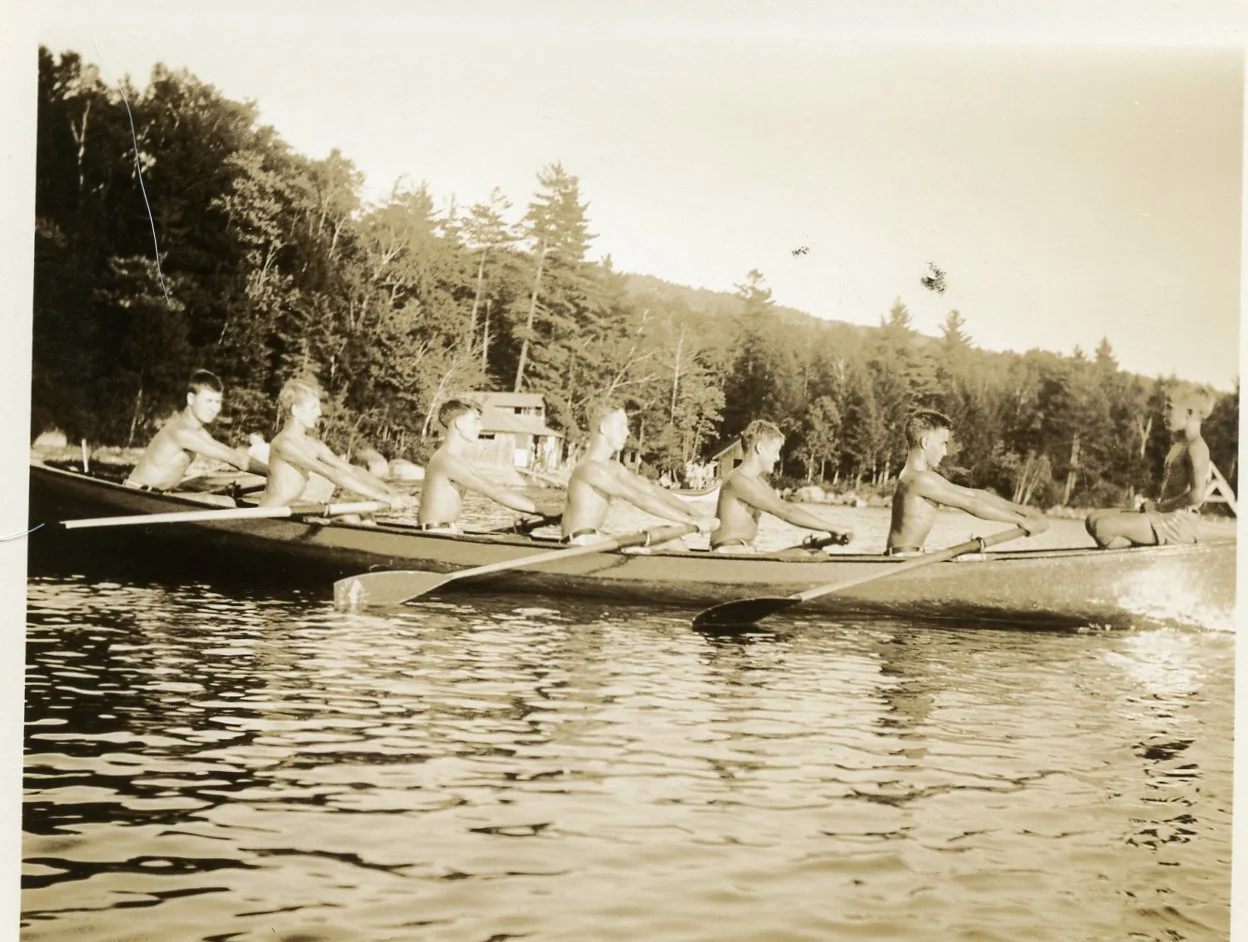
The boys at the Fancy Dress Ball, started in 1911, were encouraged to be totally self reliant in making their costumes this year and it was a great success. Crew continued as a major feature and Mowglis continued to establish its presence as trailblazers in the White Mountains.

Crew boat
Trail maintenance
1930
Horseback riding

Horseback riding was introduced and 45 boys participated under the supervision of Mr. A. W. Stuart.

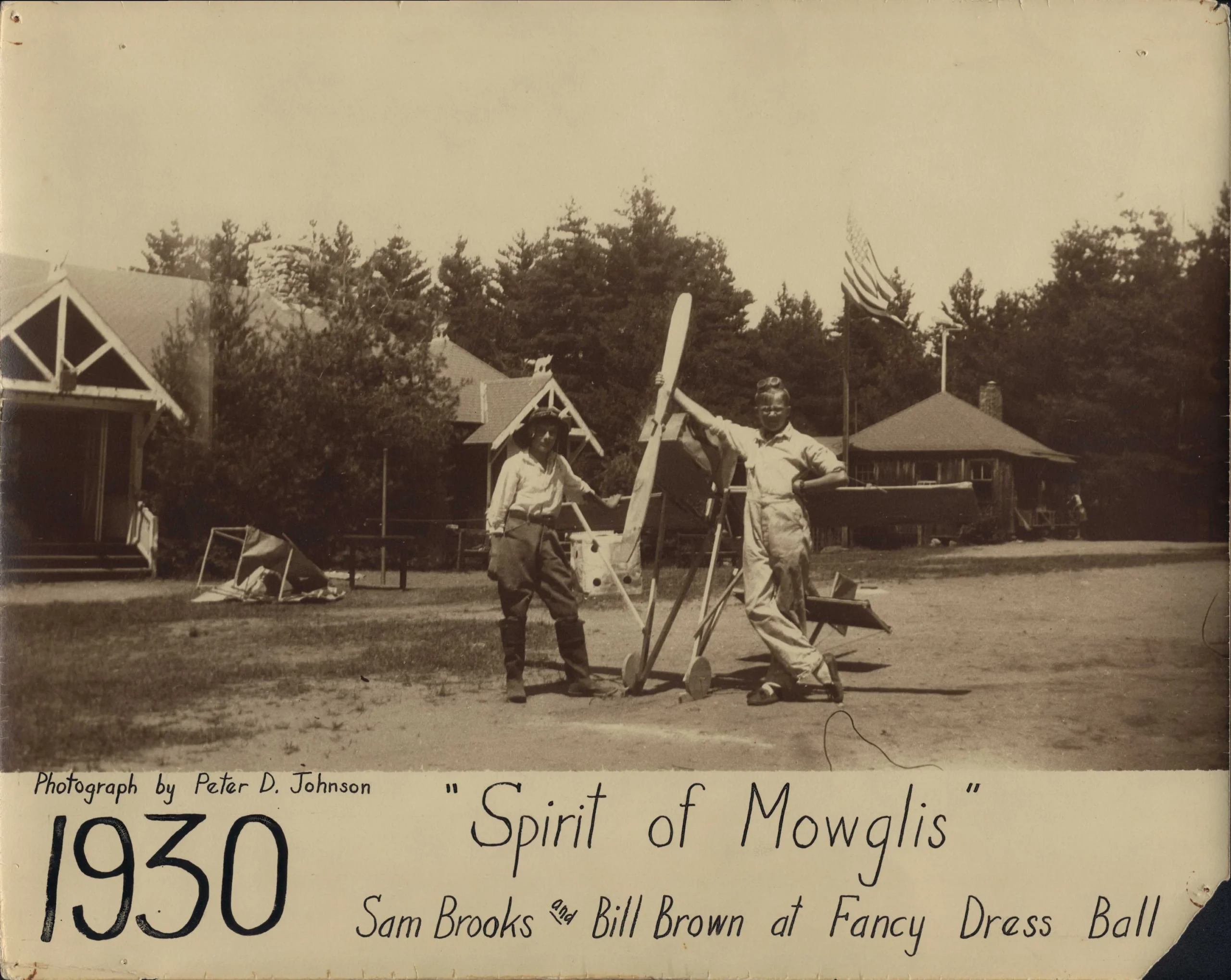
Amphibean at Camp Mowglis!
Spirit of Camp Mowglis
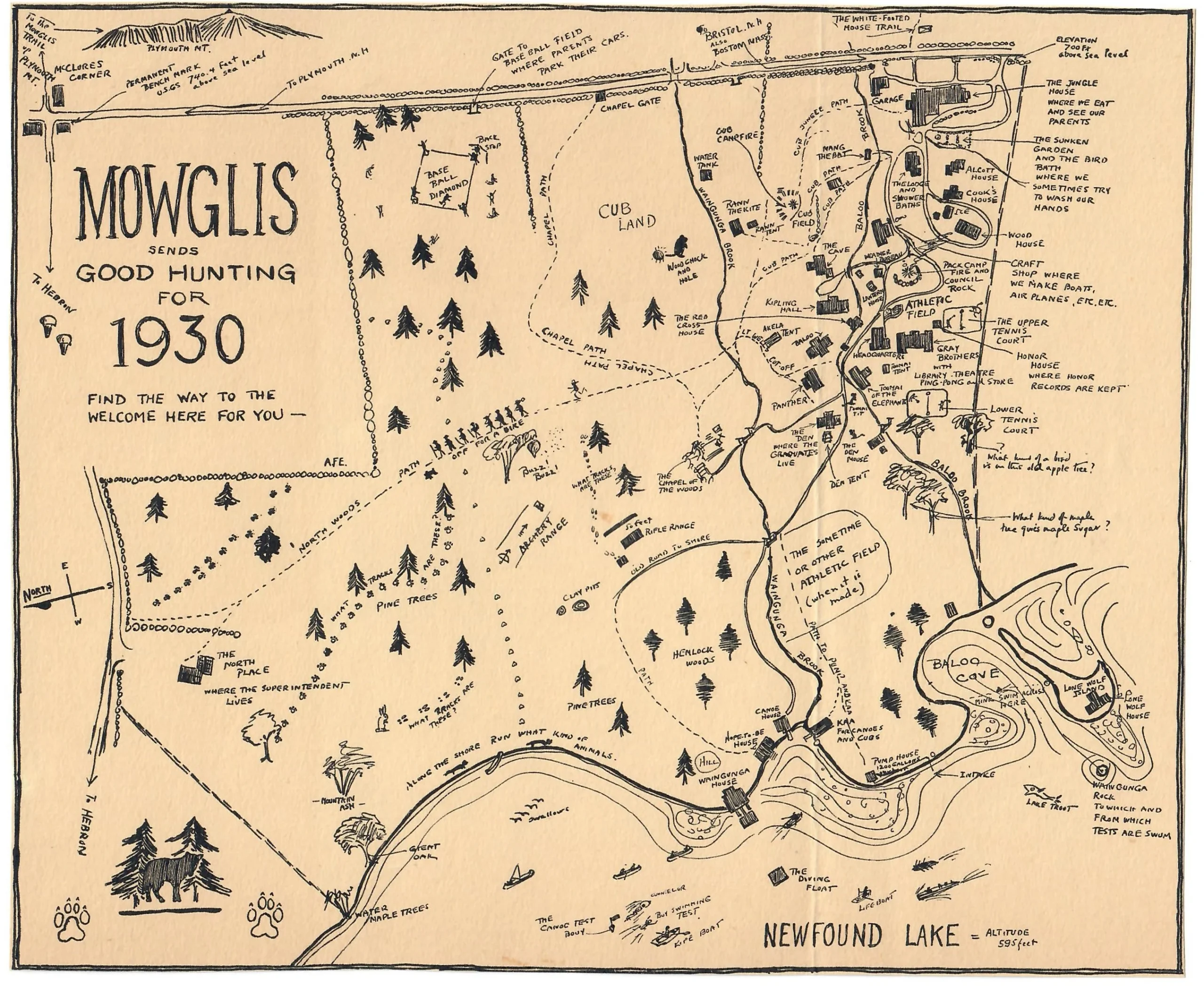
Col. Elwell map of Camp Mowglis
1931
Packing for a trip

A custom 1½ ton Ford truck with extra-long wheelbase was purchased for camping trips.

1932
Mr. William B. Hart

William B Hart was hired to run the Mowglis Music Program, including an 18-player orchestra. This began a decades-long relationship between him, his family, and the camp.

1933
Boating Song

Both the Boating Song by Wilton E. Henley and the Akela Song by William Eareckson were written.

Blue Racing crew 1933
Mr. Spock Crew Coach 1934
Akela
Akela Song
1937

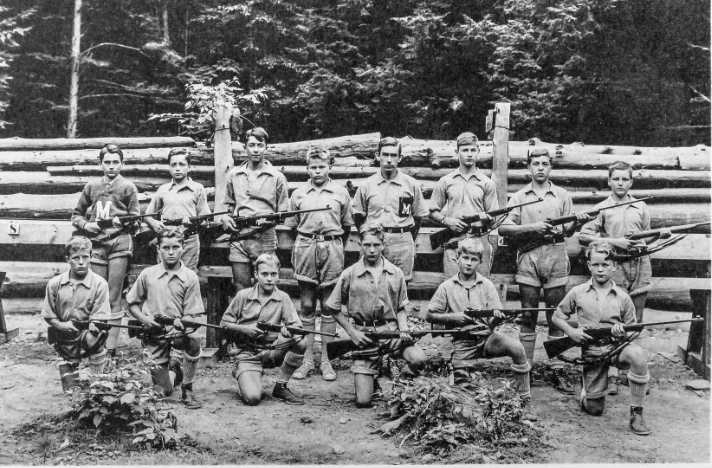
The Rifle Range was expanded with a gift from the wife of Stanley Elwell.

Stanley Bruce Elwell
1938
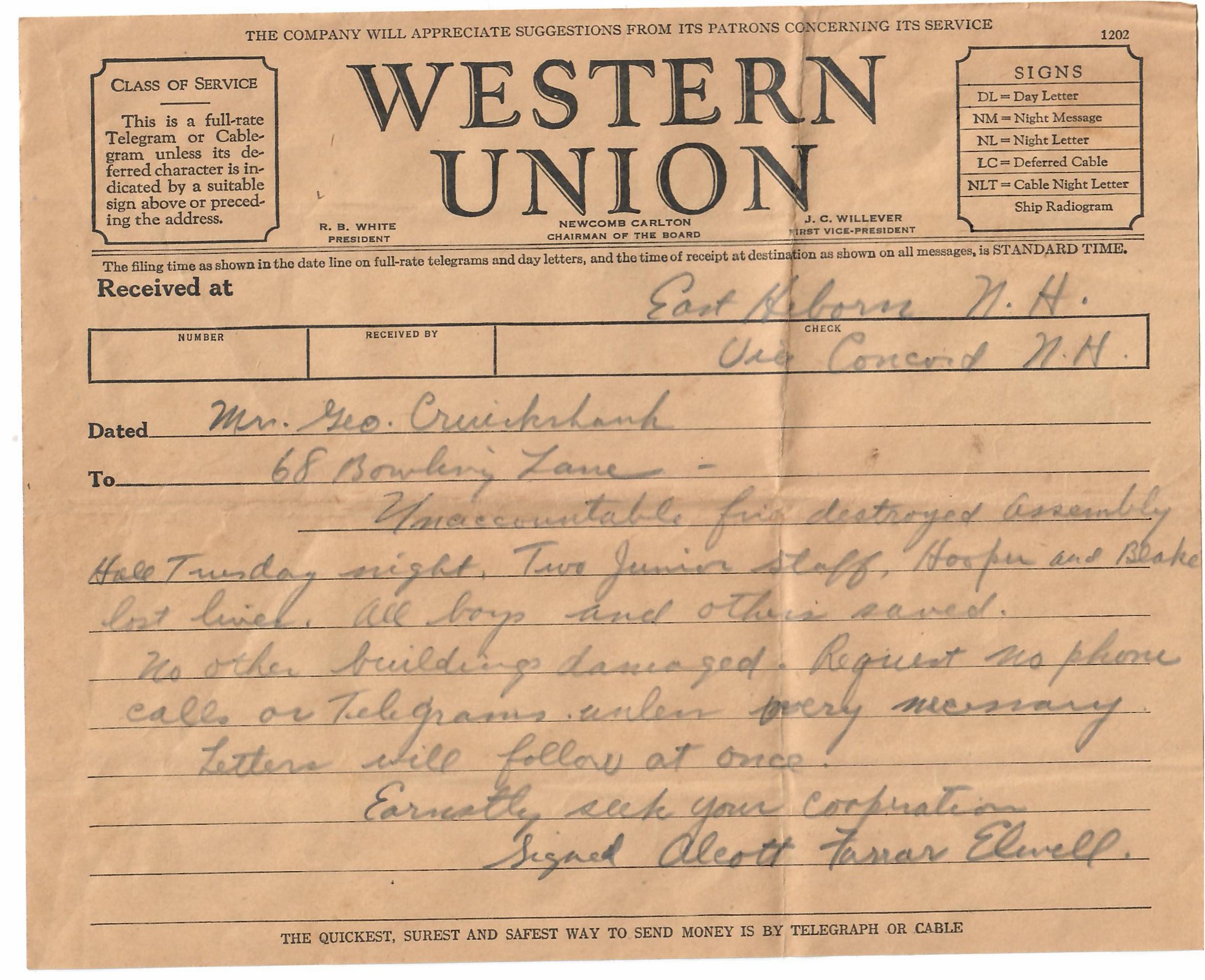
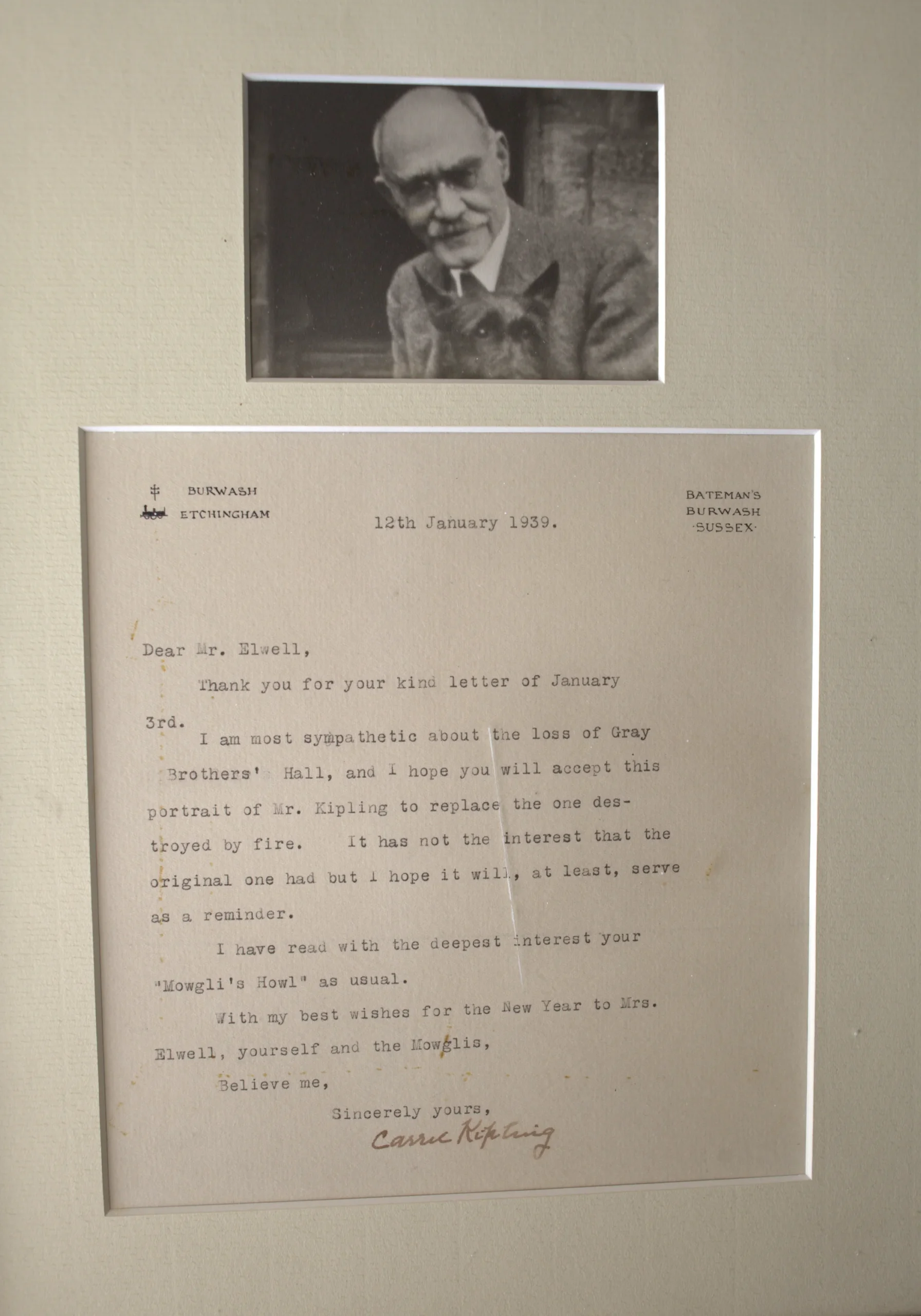
Telegram after fire. George Cruickshank was the financial secretary for the camp.

In the summer of 1938, Gray Brothers burned to the ground resulting in the deaths of 2 junior counselors who were sleeping there. The cause of the fire was never established and was contained to Gray Brothers Hall. Other dorms and staff were safely evacuated until the danger passed. Parents were urged to allow their sons to remain in camp and finish the summer as usual. Resilient as always, the staff and boys carried on.

All Camp
From Carrie Kipling, Rudyard Kipling's wife.
1939
Gray Brothers rebuilt

Gray Brothers was rebuilt with much of the funding provided by current and former campers. The Great New England Hurricane (1938) blew down a large number of trees that were reclaimed and milled into lumber for the new building. Mrs. Robert Blake, whose son Robert Clement Blake, Jr died in the fire, donated $1000 to establish a library in his memory.

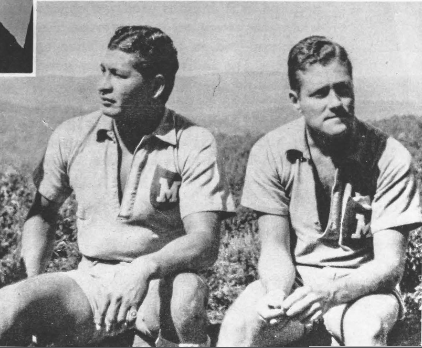
Mssrs. West and Merriman

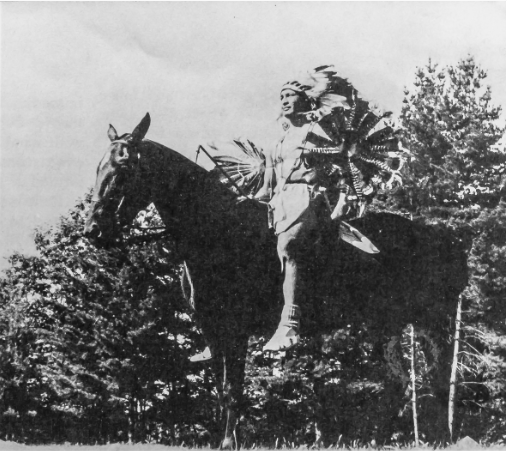
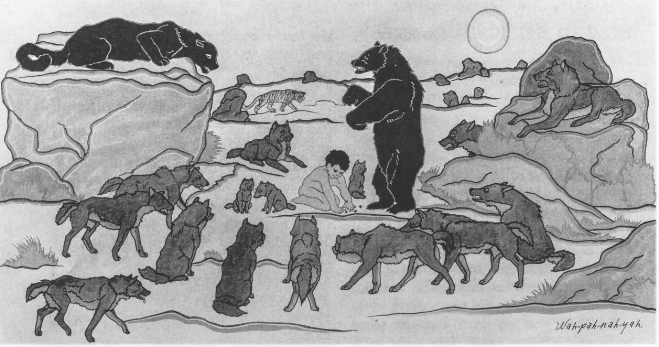
Walter Richard West Sr., also known by his native name Wah-pah-nah-yah, arrived in 1939 as a counselor. He shared his art and culture and thus began a lifelong relationship with Mowglis. His art still graces Gray Brother’s Hall. He remained at Mowglis as a counselor for 4 years but remains a Mowglis legend to this day.

Wah-pah-nah-yah on horseback at Mowglis
Portrait of Wah-pah-nah-yah
1940
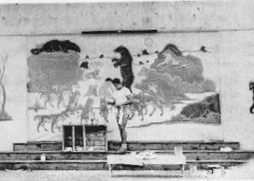
Dick West painting the stage curtain in Gray Brothers Hall

Dick West painted the stage curtain and side panels in Gray Brothers Hall using themes from the Jungle book. These were unique departures from all other art that he did during his lifetime. As one boy remarked in a Howl, “These pictures make a great improvement over the blank screen we have seen every time we went into Gray Brothers.”(F. Lane)

Completed stage curtain
1943
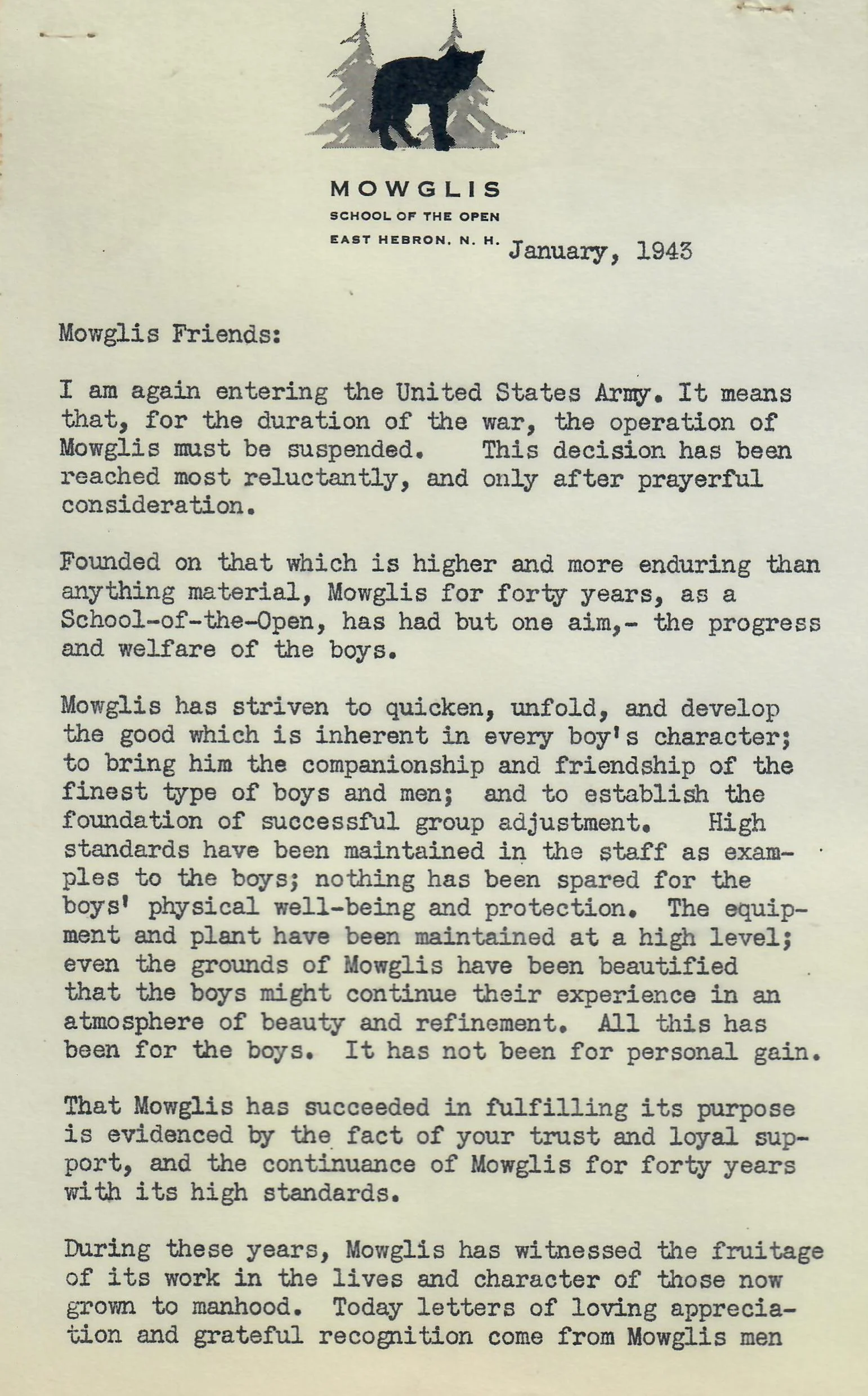
Letter of Elwell rejoining the Army

Alcott Elwell closed Mowglis for the duration of World War II and at age 56, rejoined the Army.

1945
Col Elwell in front of Lodge

Col. Elwell reopened Mowglis and remained Director for 8 more years. The Howl, however, was not published again during that time.

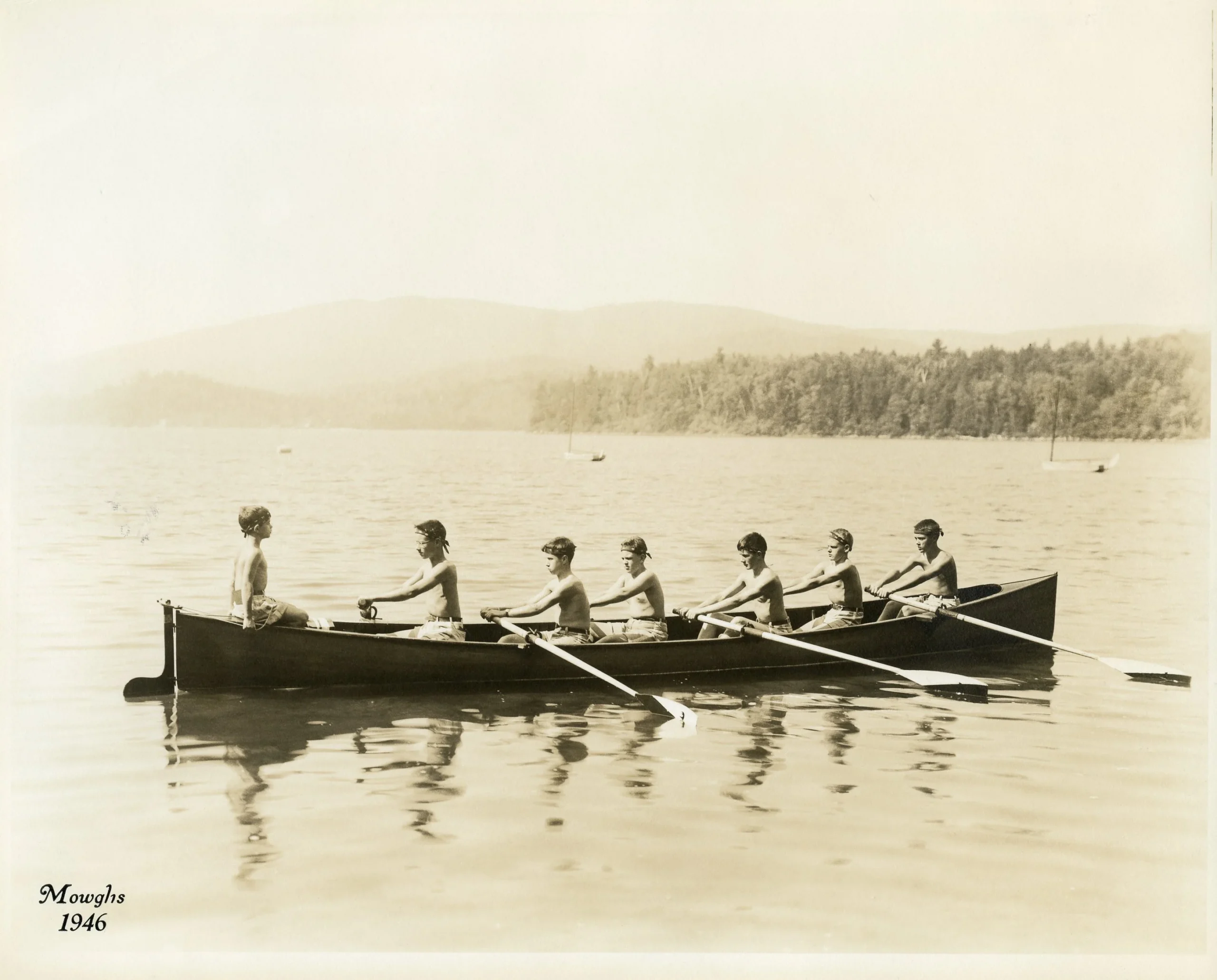
Crew on Newfound Lake 1946
Map of Mowglis Hiking Trails in White Mountains
HMS Pinafore 1950
All Camp 1952
1953
All Camp 1953

The Camp was sold to Elwell’s assistant director, Darwin Kingsley III, who served as Director through 1957. Kingsley was a graduate of Yale who studied and worked in education as Director of Admissions and teaching Latin for Fay School of Southborough, MA. As Director of Mowglis, he developed Baloo Cove, the waterfront used for younger boys, and also moved the former Honor House to Baloo Cove Road, where it was upgraded to become the cottage now known as Hathi. Despite his efforts, the Camp fell into debt.


1954-1962

The Interlude Years

The Interlude Years
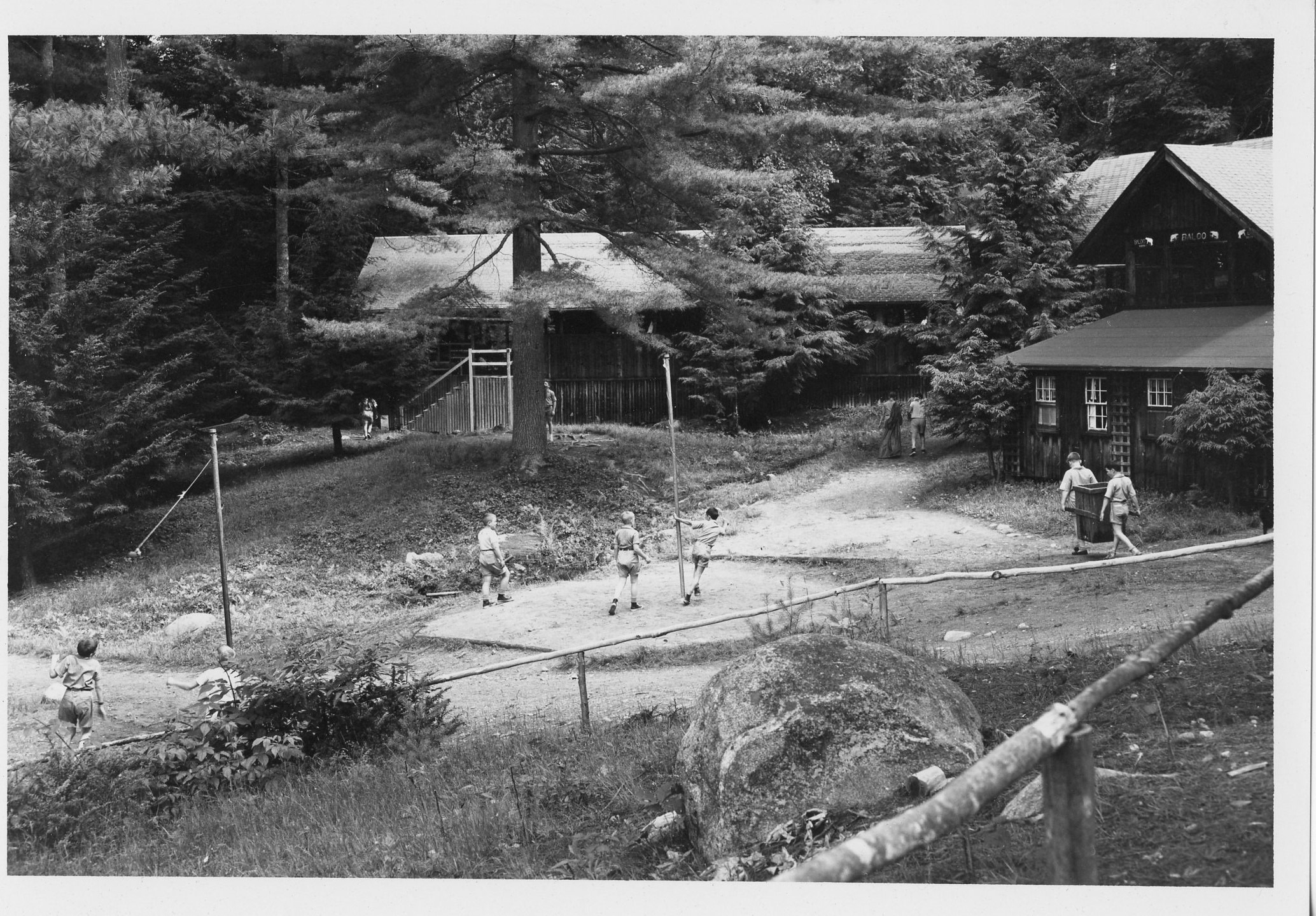
Tetherball and Dorms 1956

While the historical record for this period is thin, we know that the Camp was bought and sold twice. Darwin P. Kingsley, III, a former counselor and assistant director, bought the camp from Col. Elwell in 1953. In 1958, Kingsley sold Mowglis to John C. Adams of Wellesley, Massachusetts, an executive with Boy Scouts of America. Go to THE INTERLUDE YEARS to learn more about their distinctive contributions during their tenures.

1958
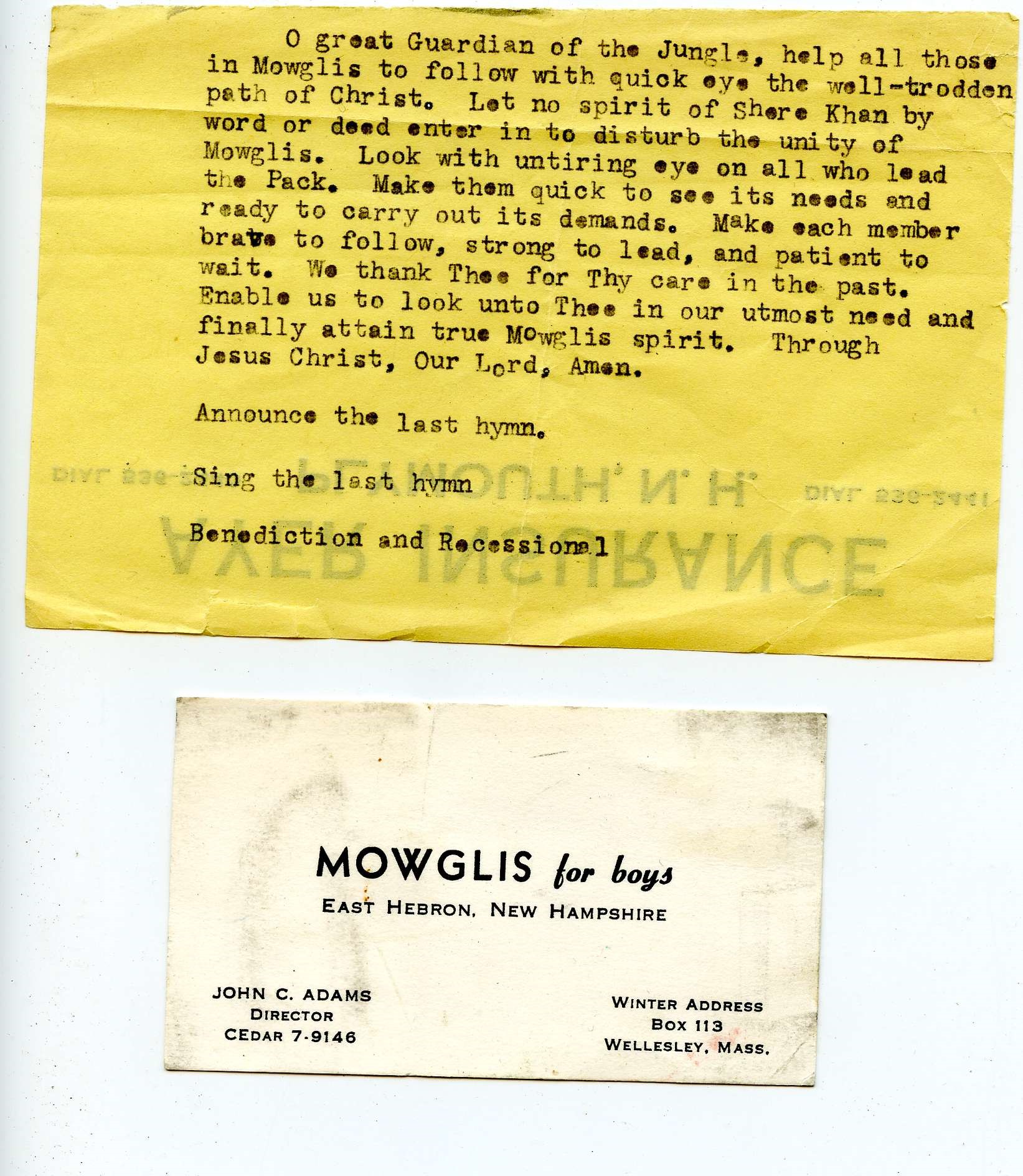
Mowglis Prayer and Adams business card

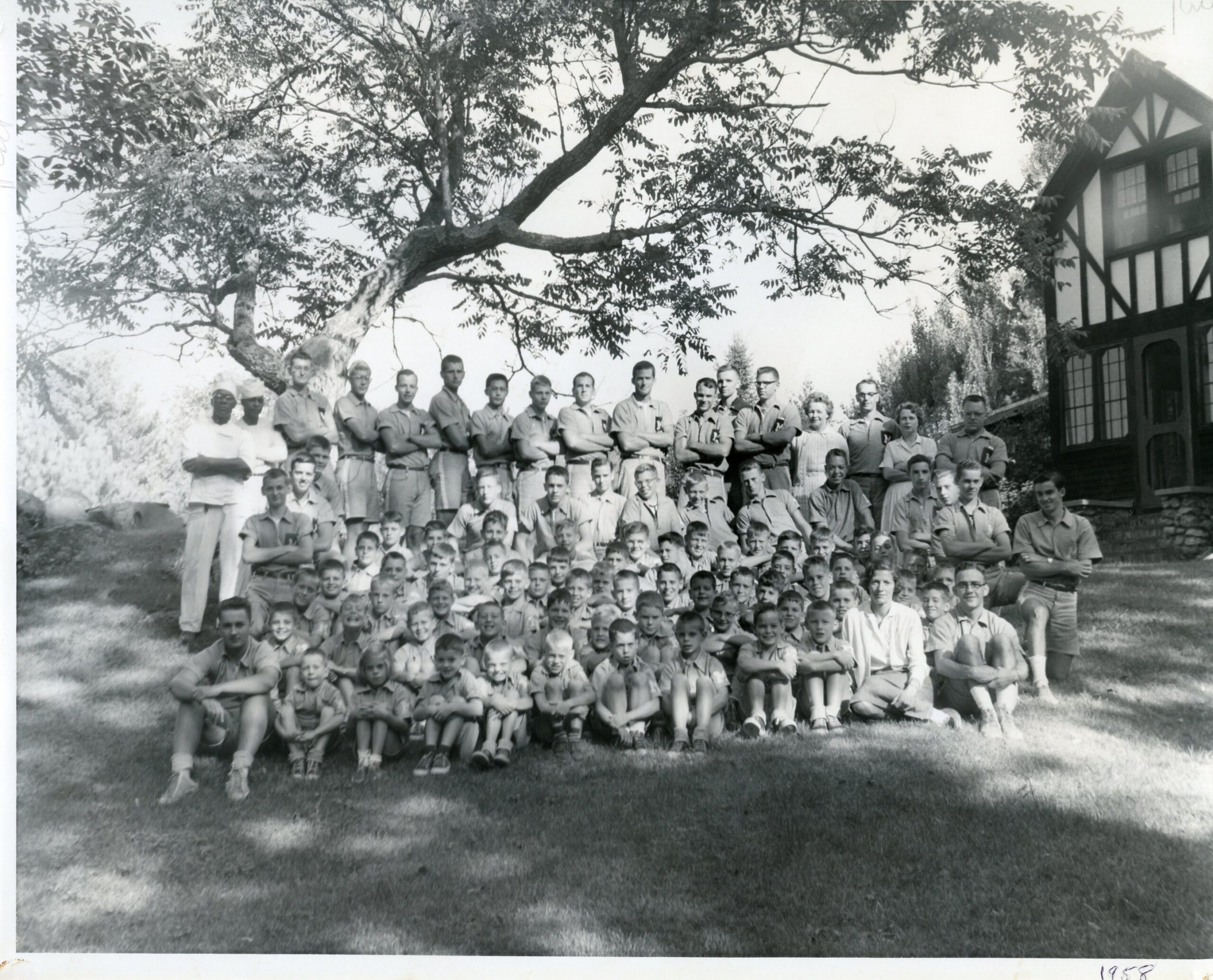
John Adams acquired Mowglis and became Director. Adams had worked for the Boy Scouts of America and had long desired to run a camp of his own. Adams increased the athletic programs at the Camp. Adams can also be credited with reinstating the Howl, an important account and photo record of the boys’ experiences at Mowglis. He also launched the Yearling Program. He suffered a skiing accident before the summer of 1961 and as the Camp became more financially untenable, Adams began to contemplate closing Mowglis.

All Camp 1958
1961
Yearlings 1961 Started by Mr. Adams

In September, Adams made the decision to close the camp. Enrollment had fallen, and he was struggling to pay off creditors, so reluctantly planned to sell.

1962
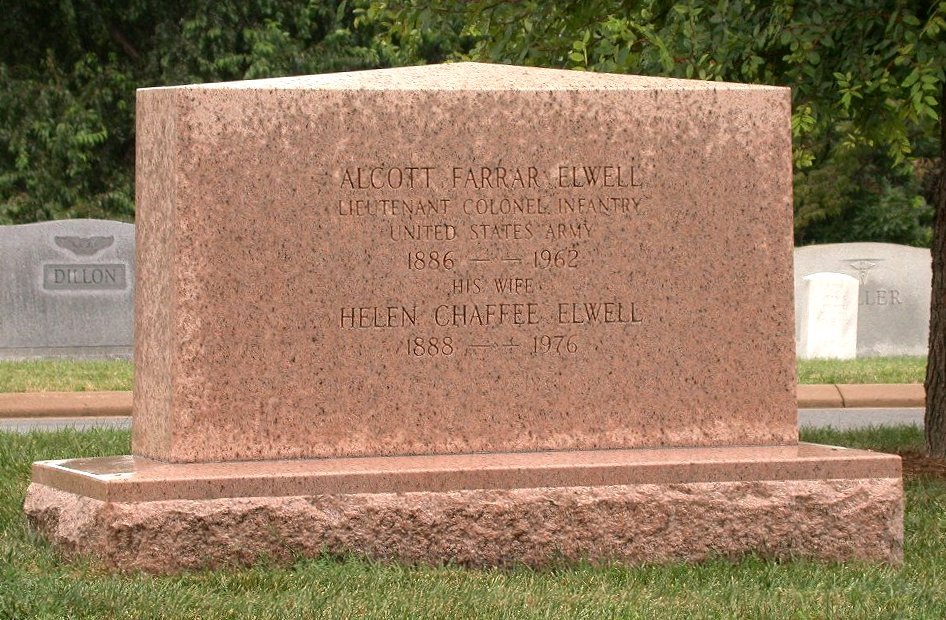
Gravestone of Alcott Farrar Elwell

Alcott Elwell died and was buried in Arlington National Cemetery with William B. Hart in attendance. Shortly after the service, Joseph Beckford, Assistant Director under Adams contacted Hart in an effort to keep Mowglis open. In turn Hart contacted William MacDonald, a Counselor from the 1940s and currently with First National Bank of Boston and Tyson Stokes, a lawyer (Mowglis 1917-1928)

1962
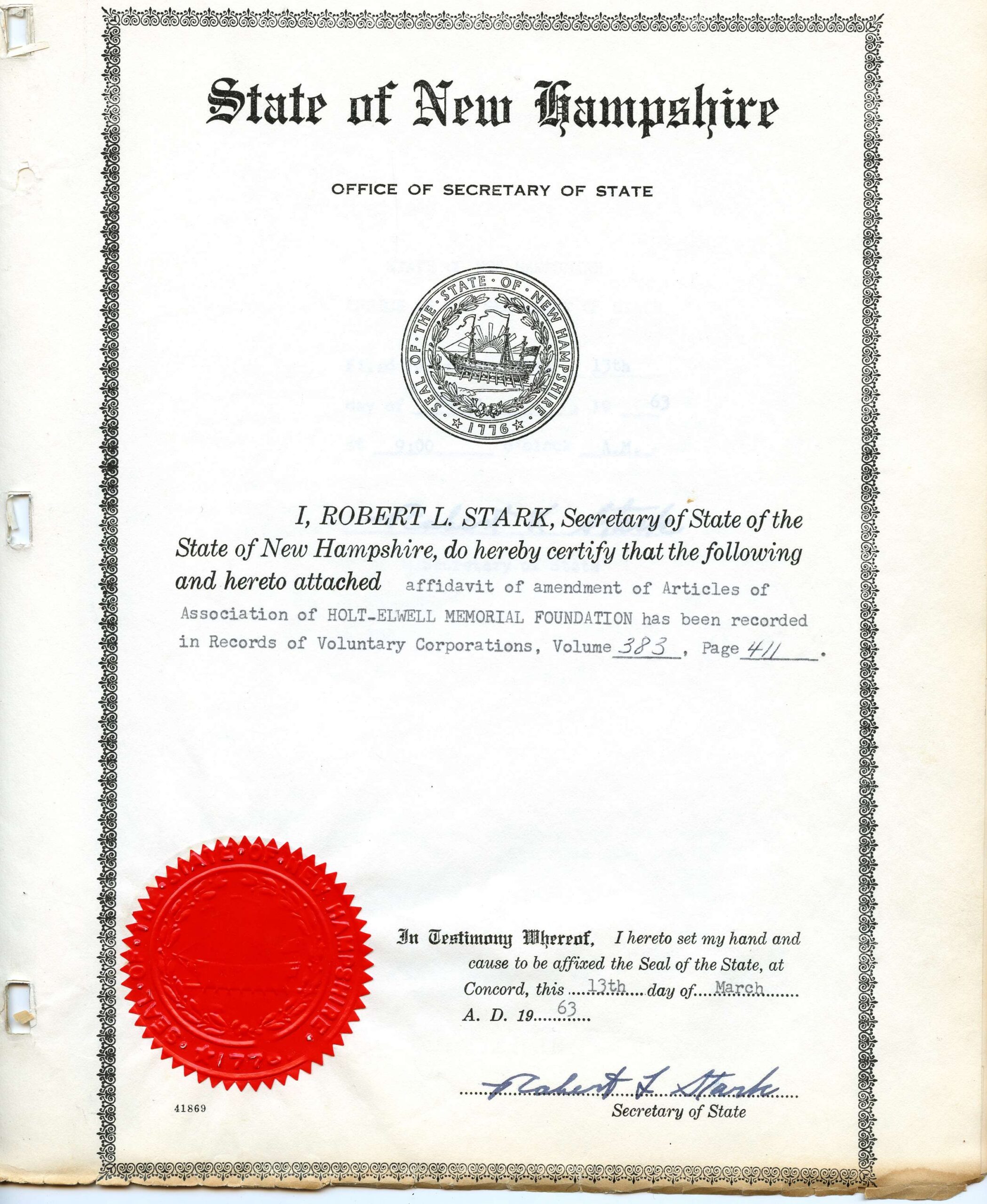
Articles of Association

July 13, the Holt-Elwell Memorial foundation was formed to run Mowglis as a non-profit organization and the Trustees held their first meeting. The following alumni or former counselors were elected officers : J. Tyson Stokes, President, Gaius W, Merwin, Sr., Vice-President, William I. MacDonald, Treasurer, and Fred I. Kent II, Secretary. William B. Hart was selected to be the Foundation’s first Director of Mowglis. An option agreement to purchase Mowglis from Adams was approved. Articles of Association were filed with the Town of Hebron and the State of New Hampshire. A vast fundraising campaign was launched among alumni and friends to save Mowglis.

On November 13 the closing takes place for the transfer of the Mowglis property from John C and Virginia Adams to the Holt-Elwell Memorial Foundation. The deed was recorded at the Grafton County Registry of Deeds the following day. Along the way, Adams substantially reduced the sales price, Kingsley reduced the second mortgage, and Mrs. Elwell entirely foregave her loan (second mortgage) of $25,000.

1963
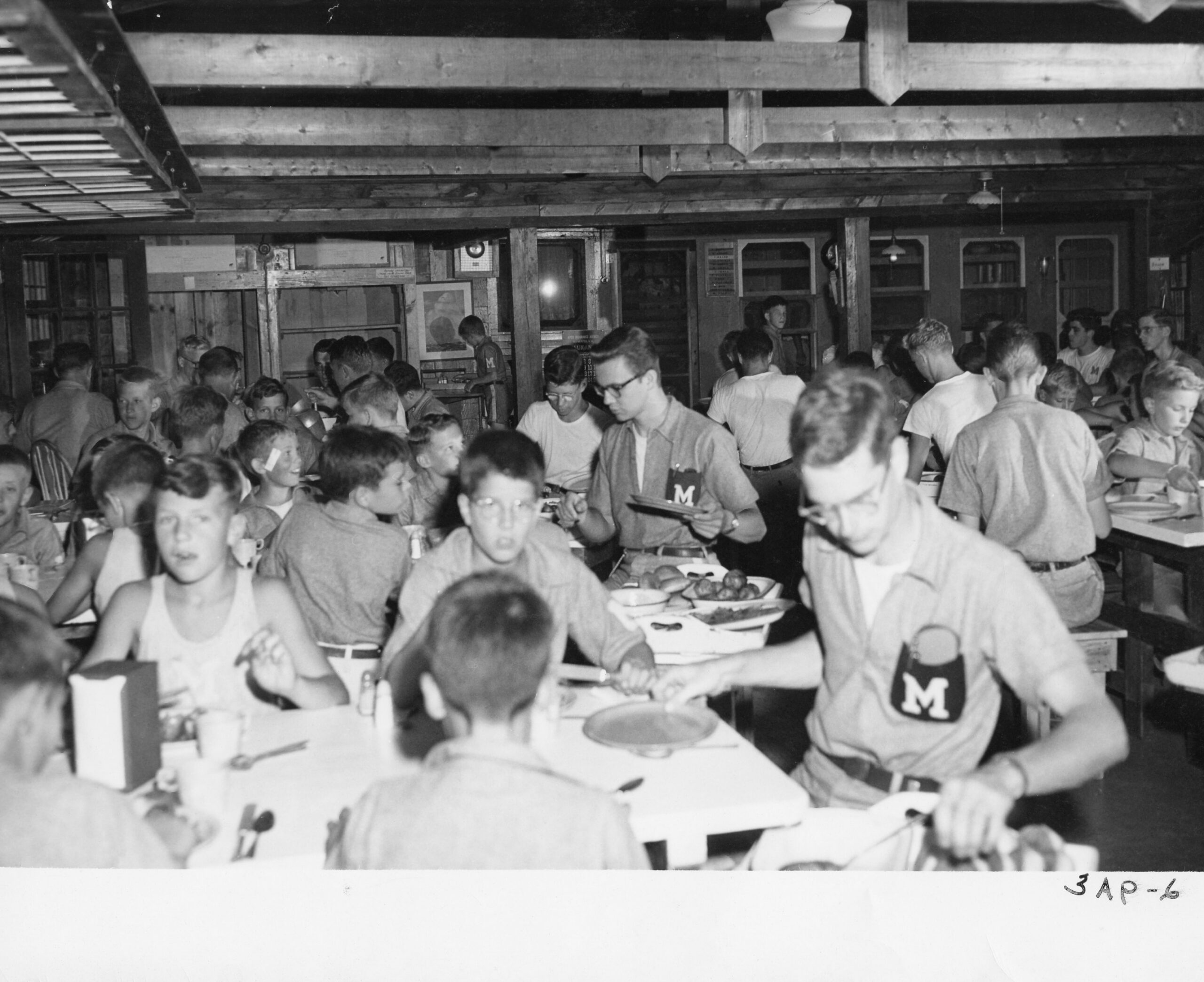
Main dining room

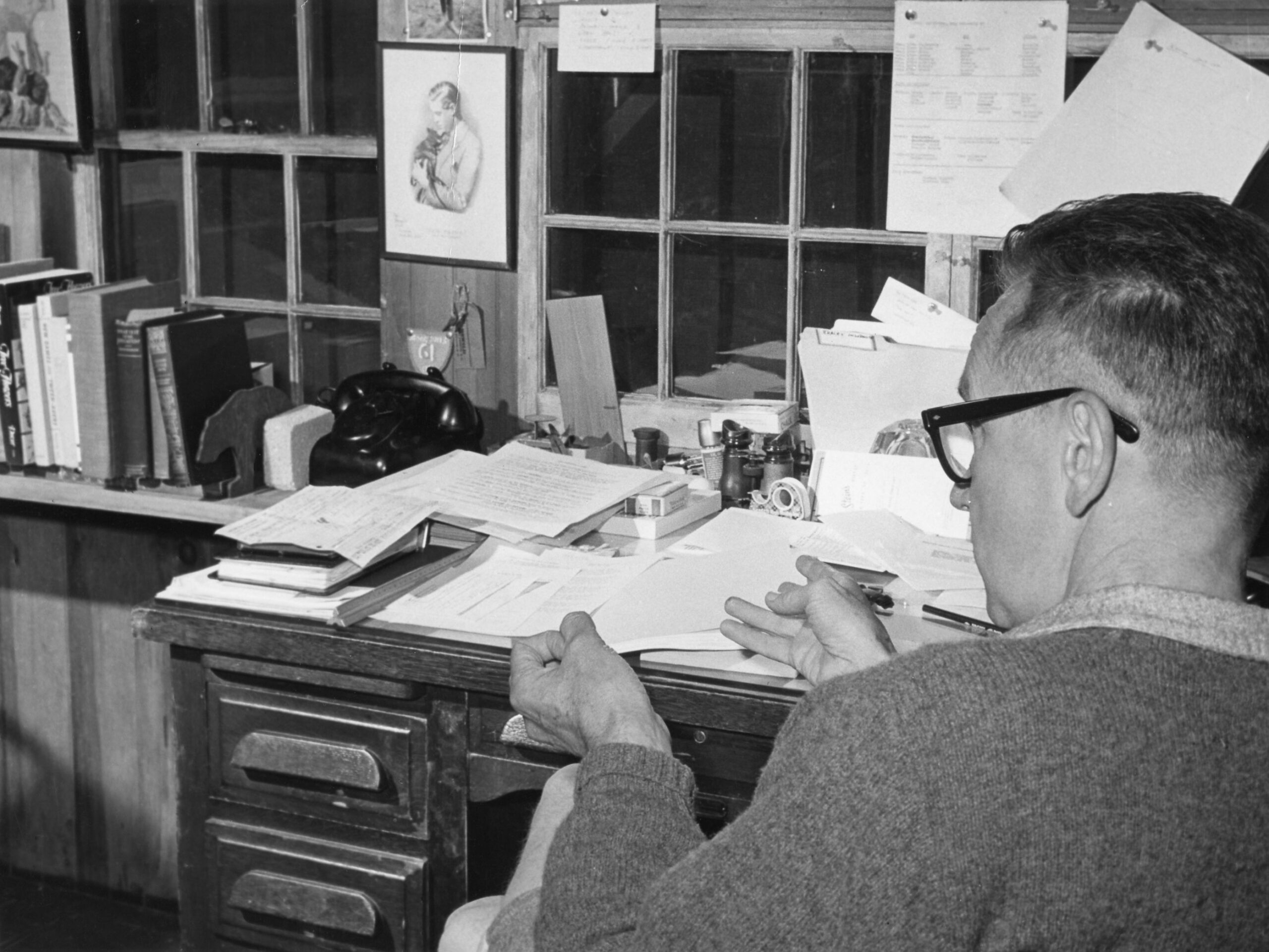
Mowglis opened its first summer as a non-profit, with William B. Hart as Director. The guiding principles and traditions were those of Mrs. Holt and Col. Elwell. Throughout this massive change in organizational structure, camp-life continued seamlessly and without impact on the program or the boys experience.

Bill Hart as new Director, at his desk
1963-Present

The Holt-Elwell Foundation Era

The Holt-Elwell Foundation Era
Toomai Dorm Pic 1983

John Adams’ personal injury, low enrollment, and financial strain forced the sale of Mowglis again in 1962. Adams could have sold to a developer but he wanted to preserve Mowglis as a camp. The death of Col Elwell in 1962 brought together many formidable Mowglis men who forged a plan to save the Camp and put it on a firm footing for the future. The non-profit Holt-Elwell Memorial Foundation was founded and continues to underpin and support Camp Mowglis. Go to THE HOLT-ELWELL FOUNDATION ERA to learn how Mowglis has flourished since then!

Secret Link

Book Your Informative Video Call

Program

Dates

Full Freight

Registration

7-Week Full Season

Ages (7-15)

Dates

June 27 – August 16, 2026

Full Freight

$13,925

4-Week Cub Program

Ages (7-9)

Dates

June 27 – July 25, 2026

Full Freight

$9,275

4-Week Intro Pack

Ages (10-15)

Dates

June 27 – July 25, 2026

Full Freight

$11,075

3-Week Cub Program

Ages (7-9)

Dates

July 26 – August 16, 2026

Full Freight

$7,825

Yearling/Junior Staff

Ages (15-17)

Dates

June 27th – August 16, 2026

Full Freight

$7,825

Book Your Informative Video Call

Current Weather

Last updated: August 3, 2026 4:59 pm

  • Temperature: 74.2°F
  • Feels Like: 78.4°F
  • Humidity: 92%
  • Condition: Cloudy
  • Wind: 10 mph at 163° (SOUTH_SOUTHEAST); Gusts up to 26 mph
  • Precipitation Chance: 13% (None)
  • Air Pressure: 1004.65 mb
  • Visibility: 8 miles
  • Cloud Cover: 99%

🤿

The Mow-Trow Gear Exchange: Smart & Sustainable Gear Sharing:

If your son has outgrown Mowglis uniform items (aka Mow-Trow) that are still in good shape, please add them to this spreadsheet. If you’re looking for Mow-Trow or other gear (hiking boots, backpacks, etc.), you can check out this spreadsheet, and if you find what you’re looking for, contact the parent who posted it up and either arrange for shipping (or to pick it up if you live in the same area).


The best way to pay for shipping will be for the family with the items to box them up and bring them to a UPS Store and have the parent receiving the items call the store with their credit card number. That is how we send lost and found items at the end of the summer, and it works quite well. Please note when items have been claimed once they have been. Any unclaimed items can be brought to camp on arrival day or shipped to camp.

🪙

Protect Your Investment: Program Protector Tuition Insurance:

Program Protector, tuition insurance, is now available for purchase during the online registration process.


If purchased, may protect up to the full cost of your son’s session and include various other benefits should the need arise.


To buy this coverage, please go HERE.


Determine if Program Protection Tuition Insurance is right for you by going HERE.

Please be in touch if you have any questions about this program. 


PLEASE submit all camper forms by May 15th. There aren’t too many forms; all are important, and most can be completed right online.

🩺

Keeping Campers Safe: Our Tick Management Approach:

How do you manage the threat of ticks?

While we have fewer ticks in NH than in more southern New England states, we still take ticks extremely seriously.


Here are some big-picture ways we protect our campers from ticks:


  • Our defense starts with staff education – all campers and counselors are taught what, where, and when to look for, and we have the campers do tick checks at least daily and every time they’ve been out in the bushes.
  • If a tick is found embedded on a camper while at camp, he will go to the nurse for removal and bite-site mapping, and then the tick is saved, and the camper will be monitored daily for any signs of infection.
  • If there is a parental desire or signs of infection, the tick is sent to a lab for testing.
  • We have bottles of bug spray throughout camp and on all trips.
  • We cut back brush to minimize the chance of ticks hopping onto folks as they walk around camp.

Mowglis Boys Summer Campers are Family

Our families know that Mowglis overnight summer camp for boys aged 7-15 is an extraordinary place. This is due in no small part to the wonderful families who have chosen our outdoor leadership camp for their sons. In joining the Mowglis family, you help us pass the torch, carrying on the tradition of summer camp to future generations and other families across the country.


From the bottom of our hearts, we thank you for becoming part of the Camp Mowglis family. Please help us spread the joy of camping. If you know of someone you’d like to invite to join our camping family, please complete our camp referral form so we can reach out.


Thank you – and see you soon!

Nick Robbins, Director

Camp Mowglis Yearling friends
Four boys in swimwear with life vests, smiling and standing together at Camp Mowglis, in front of a wooden cabin surrounded by greenery.
summer camp new england

Connect with Nick

Nick Robbins

Director of Camp Mowglis

[email protected]

(603) 744-8095

Privacy Overview
Camp Mowglis for Boys

This website uses cookies so that we can provide you with the best user experience possible. Cookie information is stored in your browser and performs functions such as recognising you when you return to our website and helping our team to understand which sections of the website you find most interesting and useful.

Strictly Necessary Cookies

Strictly Necessary Cookie should be enabled at all times so that we can save your preferences for cookie settings.